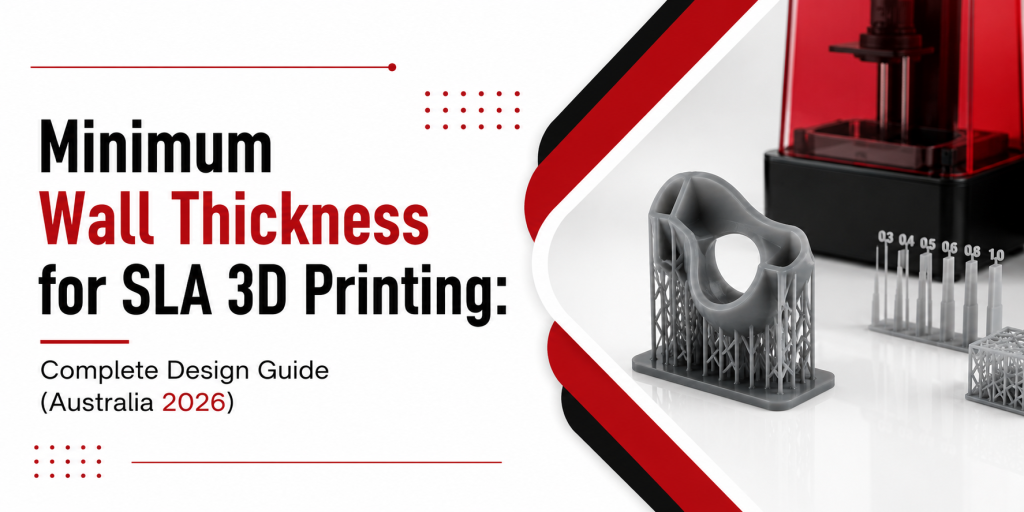
A lot of people use SLA 3D Printing to make prototypes with a lot of details, visual models, and useful parts. However, wall thickness is a major impact in print quality. When wall width is wrong, pieces can break, warp, or not print.
Working with professional designers helps for this reason. Companies can use CAD Deziners to improve CAD models and fulfil SLA printing specifications. Their method is based on getting more accurate prints, using less paper, and getting solid results.
Denvo Elements’ main goal is always to give people useful information that helps them get consistent results. In 2026, anyone working with SLA printing needs to know about wall thickness. This is especially true as design standards continue to change.
What is the Minimum Wall Thickness for SLA 3D Printing?
Wall thickness is the distance between two facing surfaces. This parameter has a direct effect on how strong and stable the end part is in SLA Printing.
- For accurate results, the wall thickness should be at least 0.8 mm.
- Walls less than 0.6 mm thick can print, but they are very flimsy.
- For general use, 1.0 mm or more is suggested.
Even though SLA technology can make very fine details, going below the suggested thickness limits makes it more likely that the part will deform while it cures and afterward.
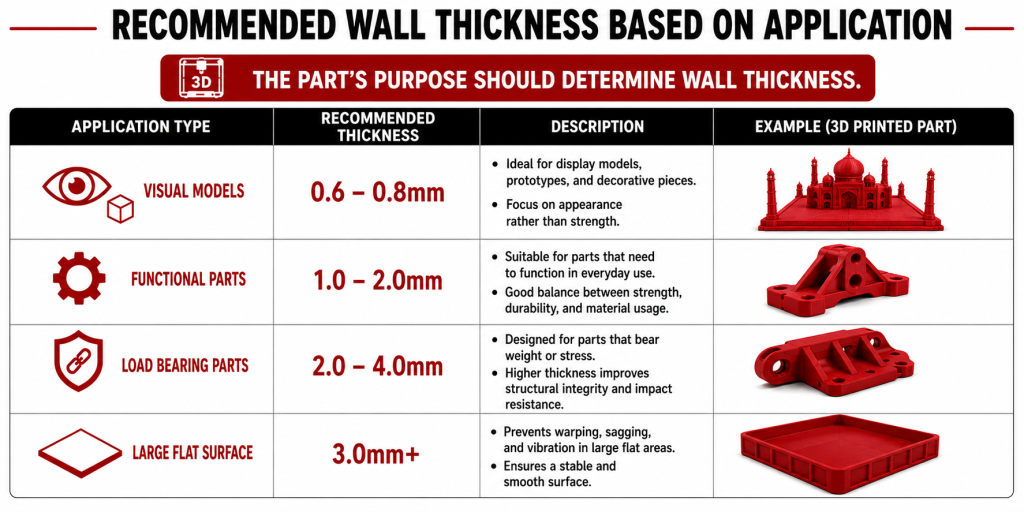
The part’s purpose should determine wall thickness:
Application Type | Recommended Thickness |
Visual Models | 0.6-0.8mm |
Functional Parts | 1.0 – 2.0mm |
Load Bearing Parts | 2.0-4.0mm |
Large Flat Surface | 3.0mm+ |
These values make sure that every kind of part works the way it should without putting the structure at risk.
Why Wall Thickness Matters in SLA Printing
Wall thickness is a very important factor in how well a printed object works generally.
- Strength: Walls that are too thin are likely to crack and break.
- Durability: The right width makes it easier to use for a long time.
- Accuracy: Distortion happens when the width is wrong.
- Cost-effectiveness: walls that are too thick use more glue.
Having the right balance is important for both getting stronger and working more efficiently.
Factors That Influence Wall Thickness
The perfect wall thickness depends on a number of design and material factors, such as:
- Type of Material: When they cure, different resins act in different ways.
- Part Geometry: Planning the thickness of complicated forms needs to be done with care
- Model size: Parts that are bigger need walls that are thicker
- Print orientation: parts that aren’t supported need to be thicker
- Post-Processing: Some finishing steps can make the thickness thinner.
Designers must consider these factors to ensure printing success.
Common Mistakes to Avoid
Printing issues can result from wall thickness violations. Here are some common mistakes:
- Building walls that are too thin to be useful
- Giving the model an uneven thickness
- Skipping over support structures
- Making plans for big flat places without adding support
- Not taking shrinking into account
Print success rates go up a lot when you don’t make these mistakes.
Best Practices for SLA Wall Thickness
Quality and dependability can be kept up by following tried-and-true methods:
- For simple patterns, use at least 0.8 mm of thickness
- Keep useful parts between 1.5 and 2 mm thick.
- Make places that are prone to stress thicker.
- Have the same wall thickness all the way through.
- If you need to, add edges and supports.
- Use care to hollow out big parts to save material
These practices help keep performance and efficiency in check.
Wall Thickness and Part Size Relationship
How thick the walls are should depend on how big the thing is:
- Small parts: 0.8 to 1 mm
- Medium parts: 1 to 2 mm
- Large parts: at least 2 mm
For bigger parts to stay stable and not shift, they need walls that are thicker.
Importance of Professional Design Support
It’s not always easy to get the right wall thickness, especially for patterns that are complicated. CAD Deziners is helpful because it makes models better for SLA 3D Printing.
Among their skills are
- Making the uniformity of wall thickness better
- Making CAD files ready to print
- Making the structure stronger
- Cutting down on production mistakes
This makes sure that ideas are both technically sound and useful.
Conclusion
In SLA 3D Printing, wall thickness is very important because it has a direct effect on strength, accuracy, and cost. Even though 0.8 mm is the bare minimum thickness, most uses need bigger walls because of how they work.
Walls can be thinner for visual models, but they need to be thicker for practical and load-bearing parts to last longer. To get consistent, high-quality results, users can follow the right design standards and use professional services like CAD Deziners. Planning wall thickness makes printing easier and the product operate better.
For more insights into modern additive manufacturing trends and SLA printing technologies in Australia, explore 3D Printings Australia