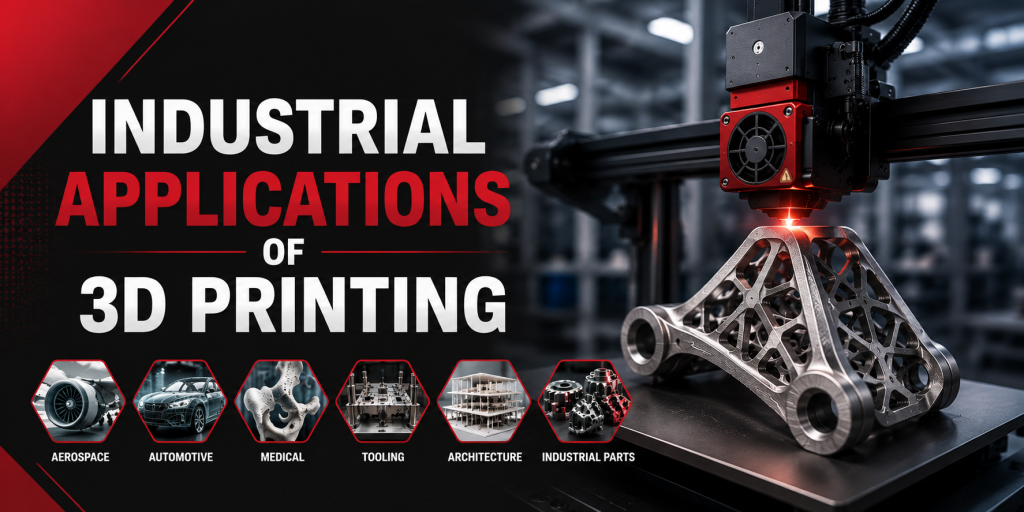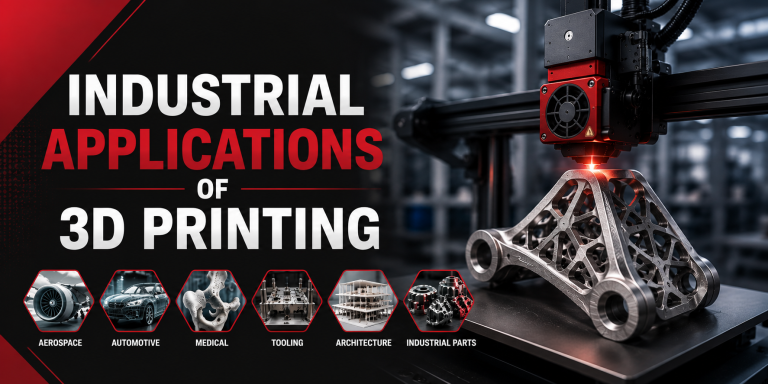
3D printing is currently one of the most significant technologies in the manufacturing industry. The technology which was initially only used in rapid prototyping has now enabled industries to create parts and components, manufacturing aids, customized parts, and end-user items efficiently.
3D printing is today extensively utilized by industries in different fields including aerospace, automotive, medicine, construction, mining, engineering, and manufacturing industries. Companies have turned to additive manufacturing for its benefits of reduced manufacturing times, minimal wastage of materials, more flexibility in design, and low-cost manufacturing in small quantities.
Through the development of new technologies like FDM, SLA, SLS, MJF, and metal 3D printing, companies can easily produce durable parts and components that cannot be easily manufactured through conventional methods of manufacturing.
1. Rapid Prototyping and Product Development
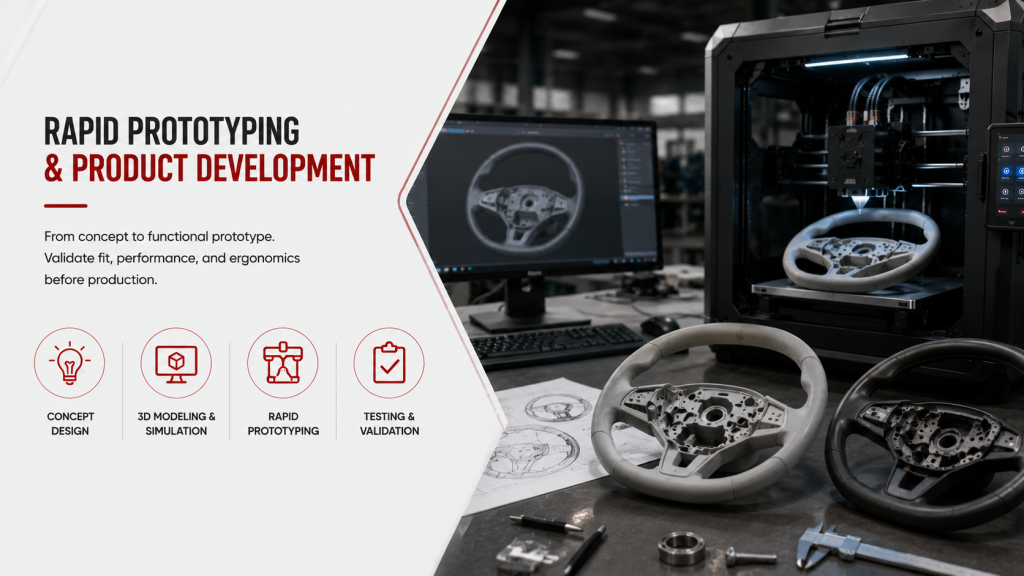
The industrial application that is one of the most widely used in relation to 3D printing is rapid prototyping. It enables manufacturers to easily make physical prototypes from CAD designs for testing purposes.
The use of rapid prototyping makes it easy for businesses to detect problems in designs, cut down on costs associated with product development, and increase speed of launch. There are many industries that have incorporated the process, which include:
- Automotive industry
- Consumer electronics
- Industrial machinery production
- Medical devices
- Aerospace industry
2. Manufacturing Tools and Fixtures
The industry utilizes additive manufacturing to design bespoke jig and fixture systems that increase manufacturing efficiency.
Manufacturing of conventional tooling may prove costly and slow. Through additive manufacturing, a company can design lightweight and customized tooling within the shortest time possible.
Advantages are:
- Rapid setup times
- Minimum operating downtime
- Increased manufacturing precision
- Affordable tooling costs
- Optimized workflow processes
3. Aerospace Industry Applications
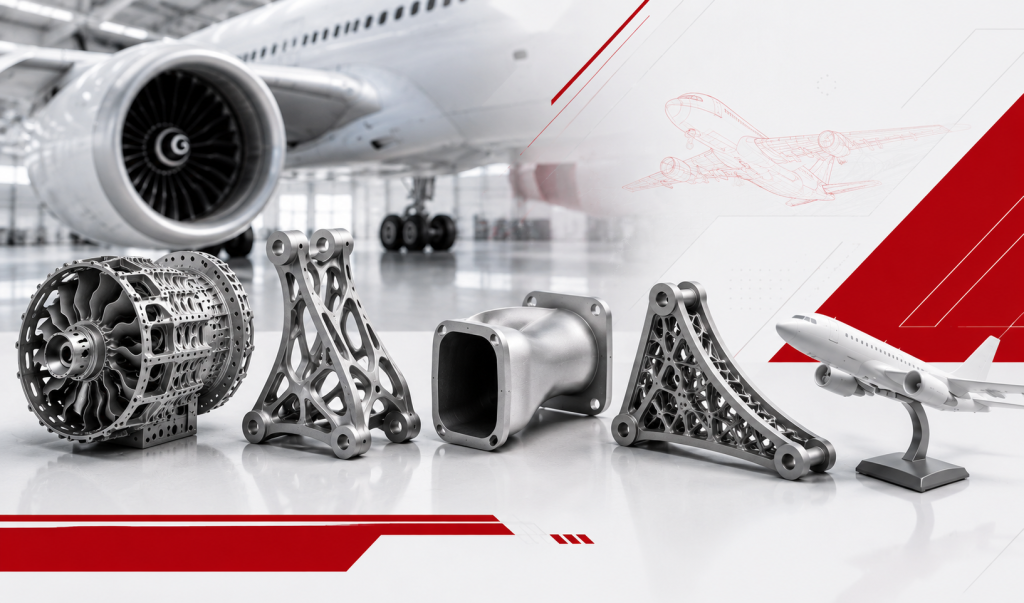
The aerospace industry is among those which utilize 3D printing in the industrial sector to the greatest extent.
3D printers are used to make lighter aircraft components with intricate designs to help increase fuel efficiency and reduce the weight of the aircraft.
Common uses for the aerospace industry in 3D printing include:
- Components for engines
- Aircraft braces
- Air ducts
- Lightweight structural components
- Model aircraft
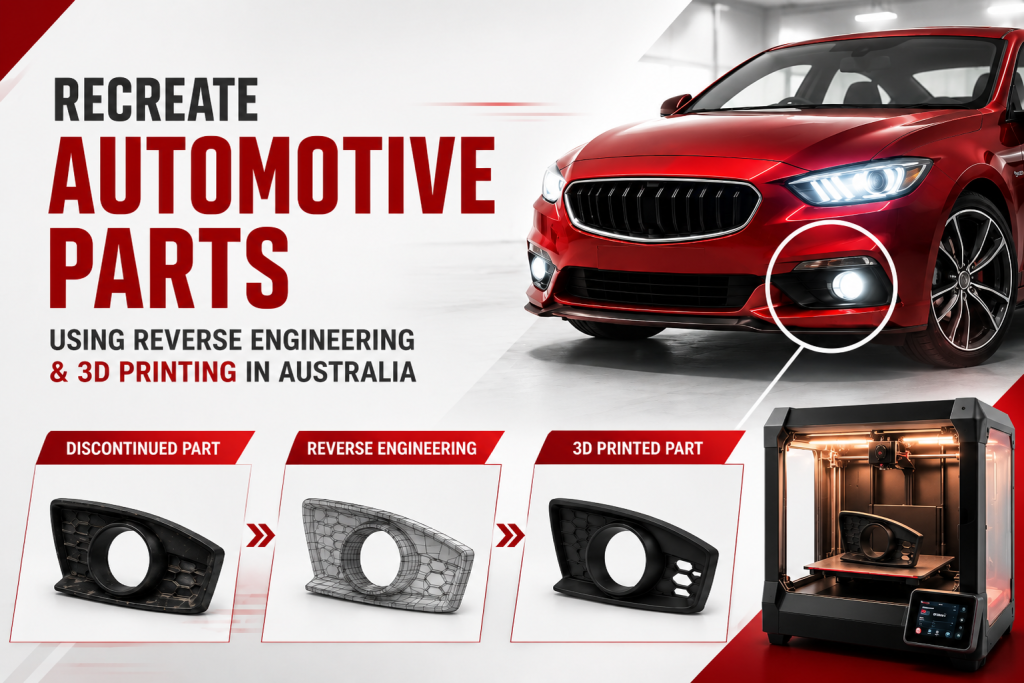
4. Automotive Manufacturing
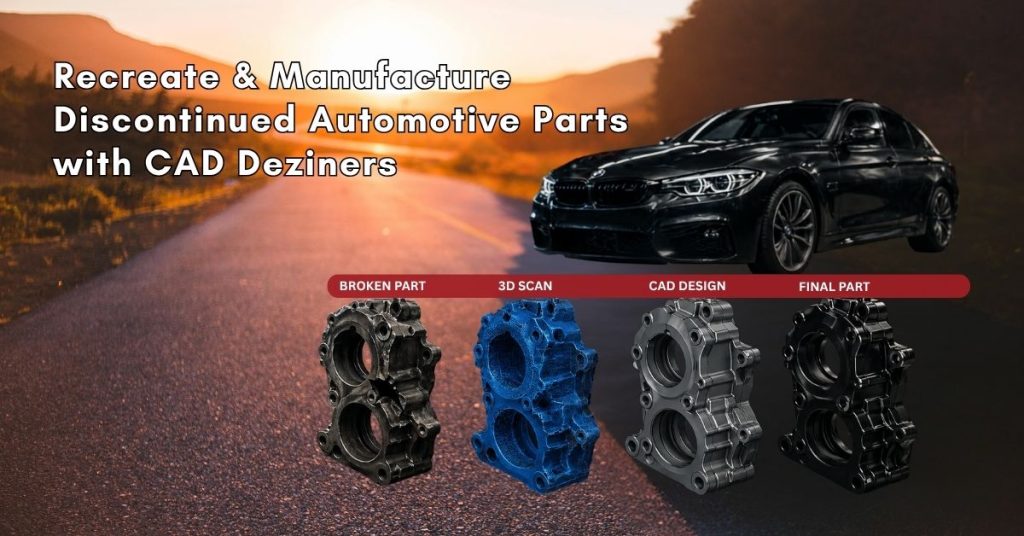
The automotive industry uses industrial 3D printing in making prototypes, tools, replacement parts, and custom car parts.
New designs can be tested faster, aerodynamic improvements made quickly, and the time taken in developing vehicles reduced.
Examples of applications of industrial 3D printing include:
- Prototypes of vehicle parts
- Components of the dashboard
- Manufacturing jigs
- Test models
- Automobile accessories
5. Healthcare and Medical Manufacturing
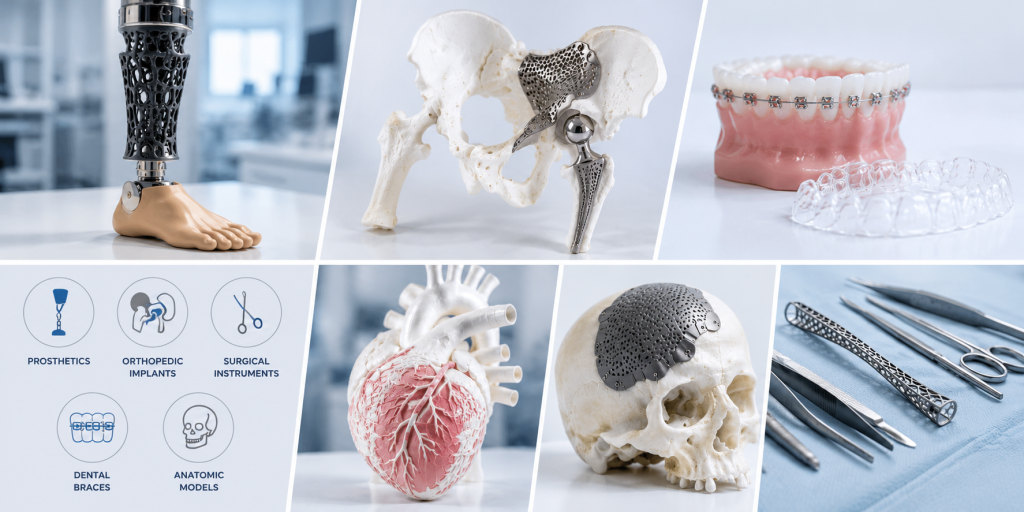
The use of 3D printing in the healthcare industry is employed to create customized medical devices.
Examples of industrial applications in medicine are as follows:
- Prosthetics
- Orthopedic implants
- Surgical instruments
- Dental braces
- Anatomic models
- Customized medical devices
6. Architecture and Construction Industry
Builders and architects employ 3D printing technology in order to make architectural models and prototypes.
Big additive manufacturing has also been considered for:
- Concrete printing
- Building parts
- Construction molds
- Interior design prototyping
- Customization of construction
With the help of 3D printing technology, architects can better conceptualize their structure designs prior to actually building them.
7. Industrial Spare Parts Production
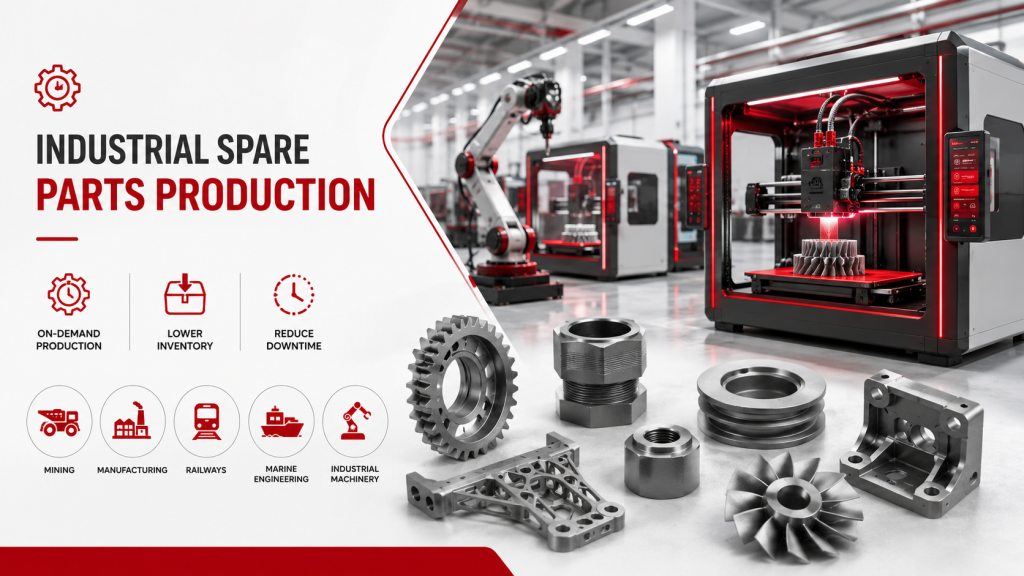
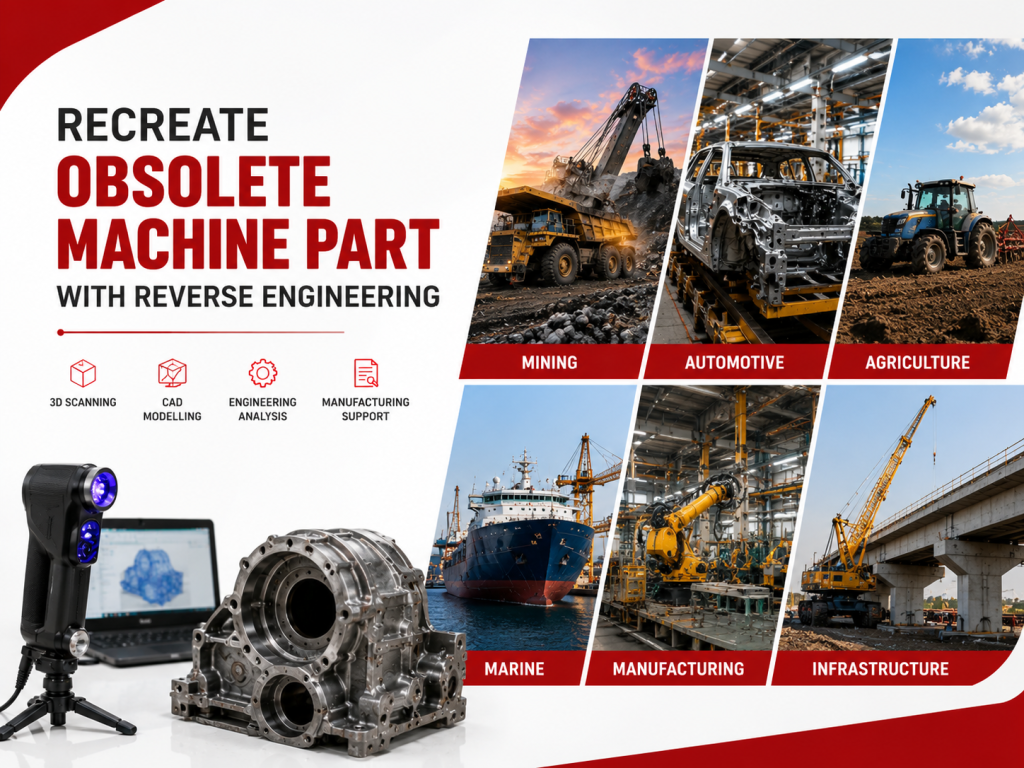
3D printing is used by various sectors to create spare parts on demand.
As opposed to keeping huge amounts of inventory, the need for spare parts can be met instantly through digital means.
Sectors that have found the production of spare parts on demand useful include:
- Mining
- Manufacturing
- Railways
- Marine Engineering
- Industrial Machinery
8. Custom Manufacturing and Low-Volume Production
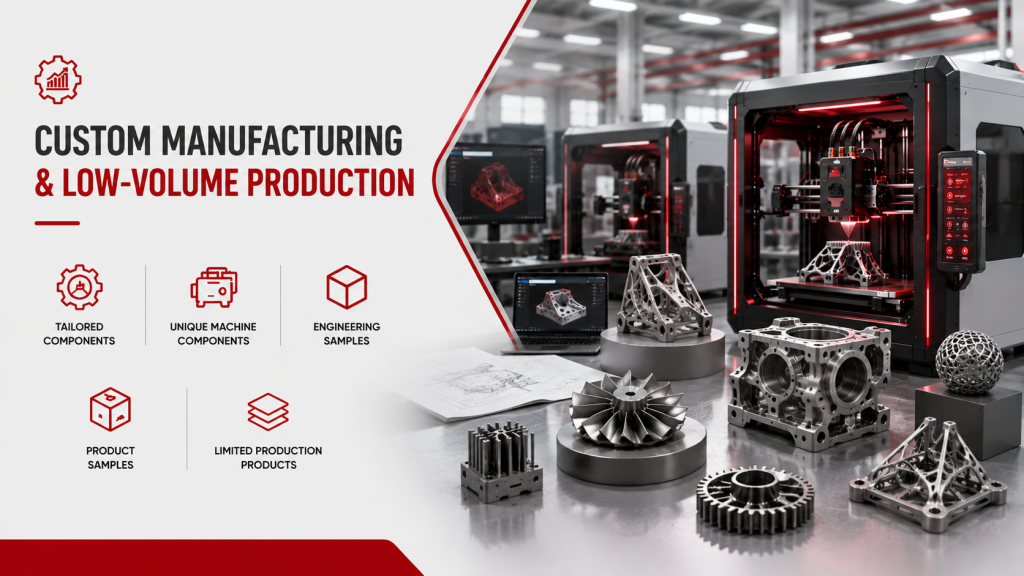
However, traditional manufacturing techniques can be costly when producing small batches. Industrial 3D printing addresses this challenge through its ability to make batch production economical.
It enables production of:
- Tailored industrial components
- Unique machine components
- Engineering samples
- Product samples
- Limited production products
This technique comes in handy especially for start-ups, engineers, and product designers.
9. Electronics and Engineering Uses
The following parts are made possible for electronics production through industrial 3D printing:
- Protective cases
- PCB encasements
- Cable management systems
- Engineering prototypes
- Industrial components
Engineers are able to experiment on their electronics products’ design before production is underway.
10. Defense and Military Applications
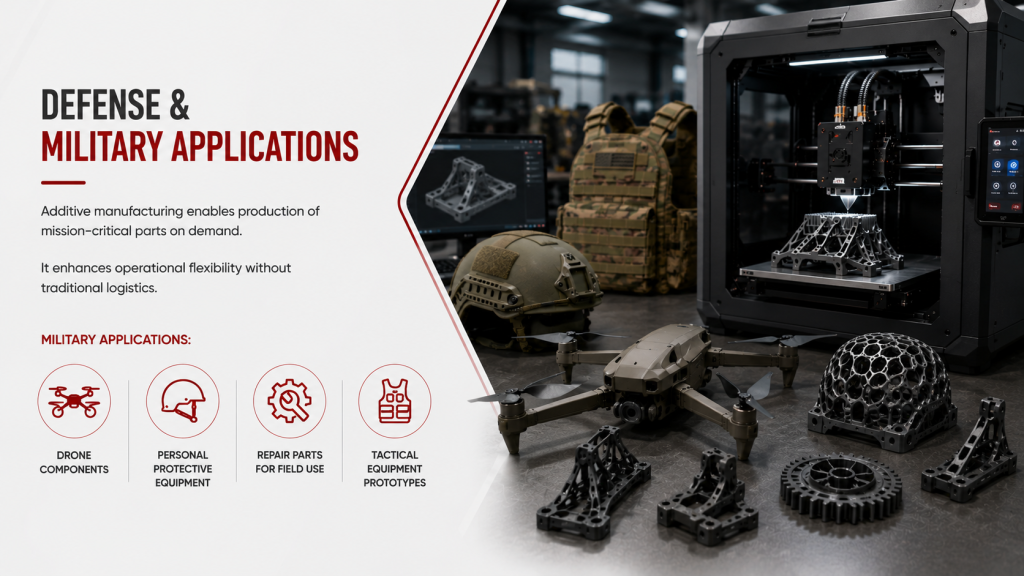
Additive manufacturing is applied by defense agencies to create lightweight hardware, repair devices, mission-related parts, and replacement parts.
On-demand manufacturing increases the flexibility of operations without relying on conventional logistics.
Defense applications involve:
- Drone components
- Personal protective equipment
- Repair parts for field use
- Tactical equipment prototypes
- Lightweight structural parts
Advantages of Industrial 3D Printing
Some of the advantages of industrial 3D printing include:
Faster Manufacturing Process
It enables faster production of complex parts with lower lead times.
Material Efficiency
There is minimal wastage of raw materials as additive manufacturing utilizes only the necessary material.
Design Freedom
The creation of complex shapes is easier with 3D printing technology.
Cheaper Prototyping
Companies can create prototypes without incurring significant costs on tooling.
Economical Low-Volume Manufacturing
Small production runs become more affordable and practical.
Expert Melbourne 3D Printing Service
Here at CAD Deziners, we specialize in providing expert 3D printing, CAD drafting, rapid prototyping, and 3D modeling services for Australian organizations.
Our experienced staff utilizes state-of-the-art precision manufacturing processes to create superior quality prototypes, custom made industrial parts, and engineering solutions that meet your specific needs.
From functional prototypes to customized industrial parts and beyond, we have you covered here at CAD Deziners.