
End-to-End Product Design: CAD Design to Prototyping in Australia
More Australian manufacturing, mining, healthcare, building, and consumer goods businesses are utilising integrated product development to stay competitive.
End-to-end Product Design Development accelerates the process from concept and CAD model development to prototype, testing, and mass production. This reduces risk, speeds product development, and ensures compliance with industry and legal standards.
What Does End-to-End Product Design Development Involve?
From concept to completion, engineering, design, and manufacturing teams collaborate in end-to-end development.
Instead of separating planning, testing, and production, this strategy flows them together. Result: fewer redesign cycles, better performance validation, and more predictable project outcomes.
Some important goals of Product Design Development are:
- Making it easy to turn ideas into goods that can be made
- Cutting down on expensive changes made at the end
- Making sure that Australian rules and standards are followed
- Making products work better and be more reliable
- Helping with scalable manufacturing readiness
CAD Design: The Foundation of Modern Product Design Development
CAD, or computer-aided design, is the most important tool for making new products. Engineers can make, test, and improve designs online before they are made of real stuff.
Parametric modelling is possible with advanced CAD tools. This means that if you change one dimension, the whole plan will change automatically. This adaptability is very important for fields that need to quickly change things to fit regulations or needs.
Pros of Designing with CAD:
- Clear 3D image previews before production
- More design changes and versions more quickly
- Modelling of stresses and loads in the real world
- Better working together between parties
- Easy switch between CAM and CNC manufacturing tools
CAD simulation makes sure that products made by Australian businesses that work in harsh or remote areas are built to last in real-world circumstances.
Engineering Analysis and Design Validation
Digital validation ensures design functionality before prototyping.
Engineering teams employ simulation technologies like FEA and CFD to test structure strength, air flow, heat behaviour, and shaking resistance.
With digital testing, you can:
- Lower costs for prototypes
- Finding design flaws early on
- Making sure safety rules are followed
- Making the best use of materials and weight
- Made the product last longer
This stage is very helpful in fields where dependability is very important, like mining tools, medical devices, and transportation systems.
Rapid Prototyping: Turning Digital Concepts into Physical Reality
Prototyping connects computer models to real-world operations. Fast development methods including 3D printing, CNC machining, and urethane casting let teams evaluate shape, fit, and function.
Prototypes can now be made in days instead of weeks while tools are being made.
Rapid prototyping has these pros:
- Product validation rounds that are shorter
- Feedback from users and stakeholders right away
- Testing for functionality in real life
- Lessened the risks of growth
- More faith in the concept before mass production
Australian innovators are using prototypes more and more to try localised solutions that are made to deal with problems in their environment, like resistance to corrosion or durability at high temperatures.
Design for Manufacturability (DFM): Preparing for Production
After a prototype works, product development begins. Design for Manufacturability ensures fast, frequent, and large-scale production.
DFM improves geometry, chooses materials, and ensures designs are compatible with injection moulding, fabrication, and precise machining.
DFM Things to Think About:
- Finding the best materials in terms of price and reliability
- Made the building process easier
- Less waste and faster creation
- Tooling feasibility and prices over the product’s life
- Compatibility with the Australian supply chain
This step makes sure that the idea doesn’t stay a prototype but turns into a product that can be sold.
Industries We Support in Australia For Product Design Development
At Caddeziners, we partner with Australian industries that require accurate design and effective engineering solutions.
We support:
Mining & Resources – Redesign and reverse engineering of robust components for demanding environments.
Manufacturing – CAD model development for production, tooling design, and DFM analysis.
Construction & Building – Accurate drafting and product design for regulatory compliance.
Medical & Healthcare – Precision modeling and prototype development.
Automotive & Transport – Aftermarket and performance component design.
Defence Supply Chain – High-accuracy engineering modeling and validation.
Our mission is straightforward – to help Australian industries transform their concepts into robust, production-ready products.
Conclusion
Recent Posts
-
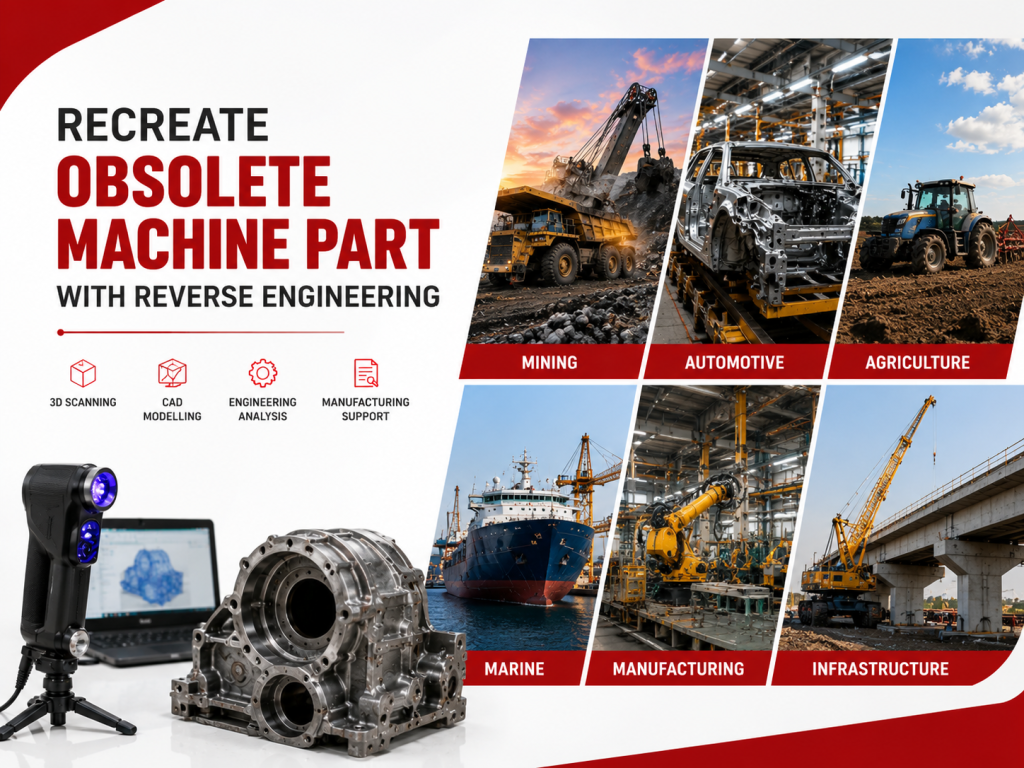
 How Australian Industries Recreate Obsolete Parts with Reverse Engineering03 Jun 2026
 -
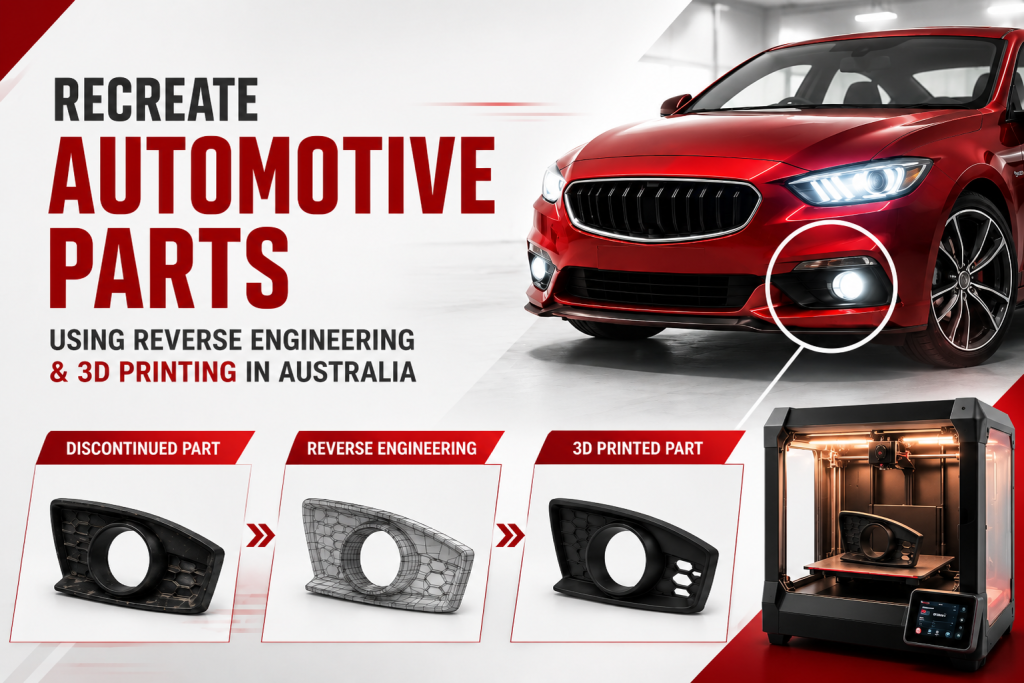
 Reverse Engineering & 3D Printing for Automotive Aftermarket Parts29 May 2026
 -
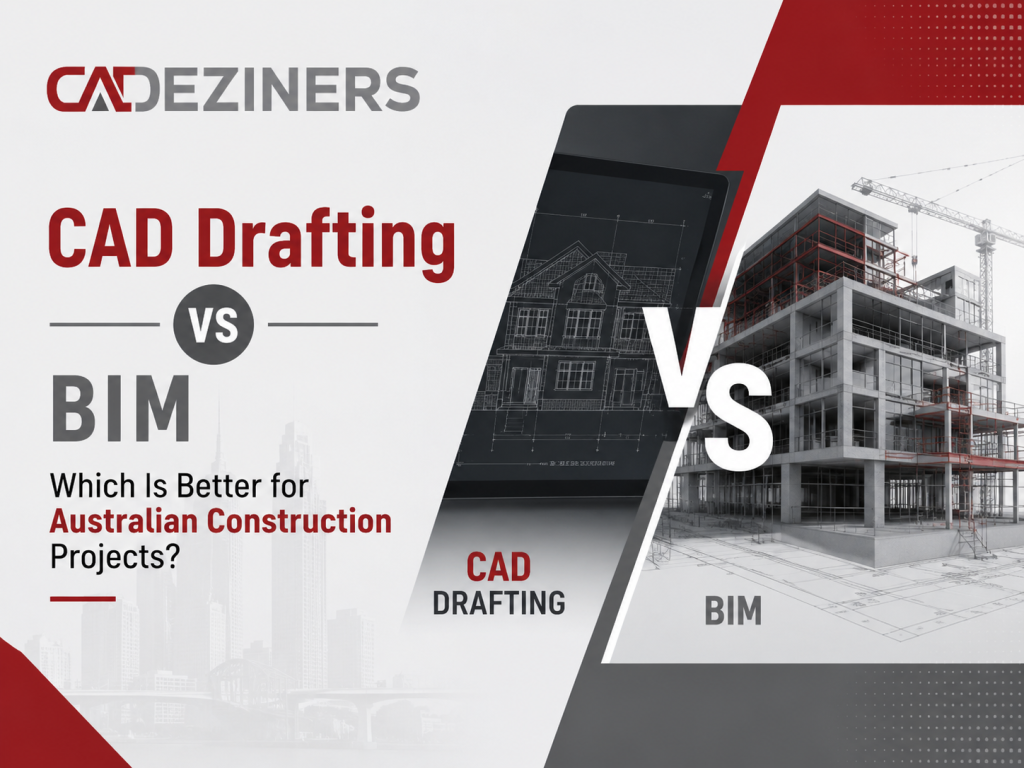
CAD Drafting vs BIM for Construction Projects in Australia22 May 2026
-
 Top 10 Industrial Applications of 3D Printing and Their Benefits15 May 2026
 -
Minimum Wall Thickness for SLA 3D Printing: Design Guide 202608 May 2026
Categories
- Blogs
- 3D Printing Articles
- 3d Scanning Articles
- Cad Drafting Articles
- FEA Services Articles
From the first CAD model to a completely tested prototype and mass production, end-to-end Product Design Development streamlines and verifies the innovation process. By unifying design, engineering, testing, and manufacturing into a single workflow, Australian companies can reduce development risks, speed up time to market, and ensure products meet strict performance and regulatory requirements aligned with Standards Australia and national industry frameworks supported by the Australian Government Department of Industry, Science and Resources.
This comprehensive approach strengthens local manufacturing and supports innovation across Australia. By following recognised engineering standards and government-backed industry initiatives, businesses can confidently transform ideas into accurate, compliant, and market-ready products with long-term value.
Frequently Asked Questions
Find answers to common questions
It means managing the whole lifecycle of a product, from the idea and CAD creation to testing, prototyping, and final production, all in one place.
CAD allows for accurate digital modelling, quick changes, and simulation testing, which cuts down on actual trial and error and speeds up the design process.
It lets teams test how well things work, find problems early, and make design changes before buying expensive tools.
DFM makes sure that a product is designed so that it can be made quickly and cheaply while still being of high quality.
Integrated design and development methods are very helpful in many areas, such as mining, medical technology, defence, construction, transportation, and consumer goods.