
Large Format Printing for Industrial Applications
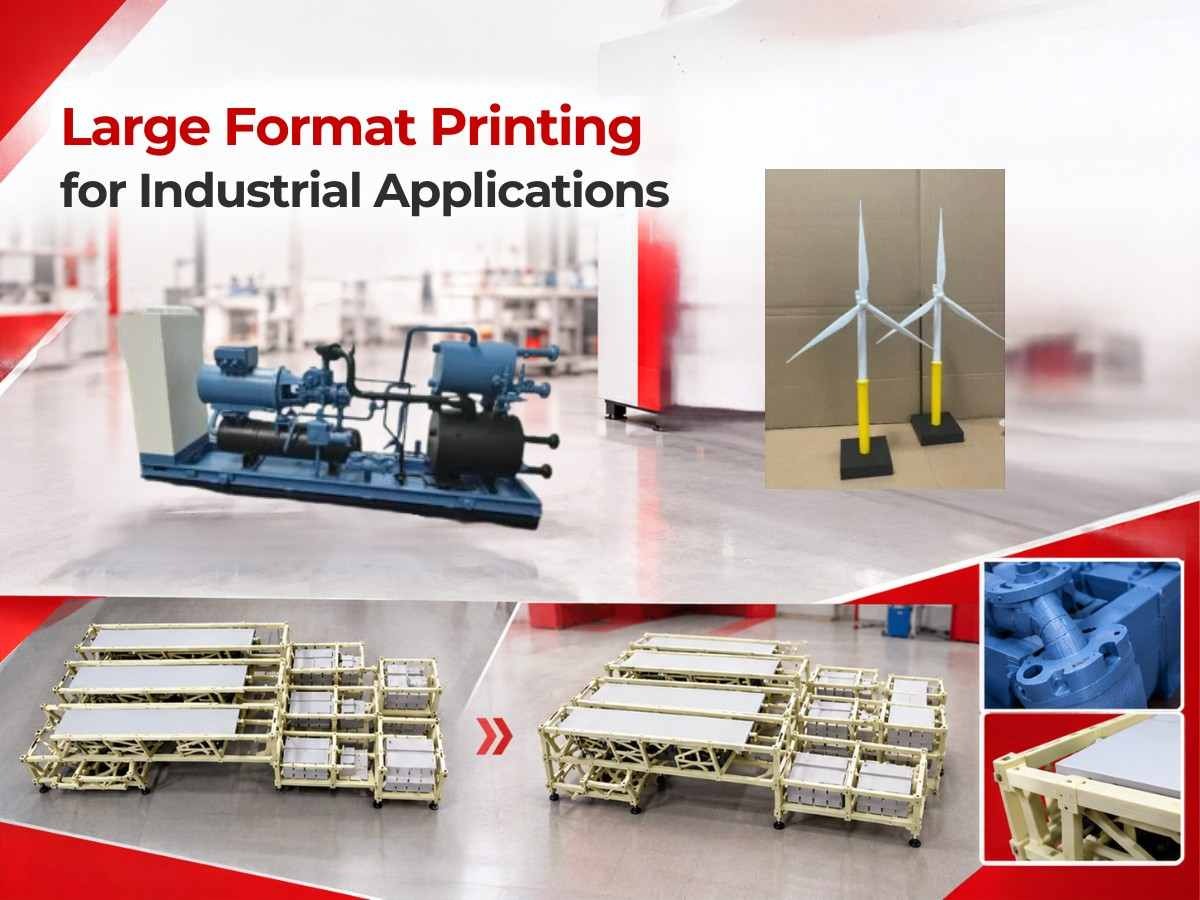
Large format 3D printing is changing the way Australian engineering and manufacturing businesses think about prototypes, tooling, patterns, fixtures and large scale components. Instead of machining or assembling multiple smaller pieces a manufacturer can now produce larger parts as a single printed component where design, material and application allow it to be done.
For industries working in automotive, aerospace, defence, marine mining architecture and industrial equipment large format 3d printing can offer a practical way to turn digital CAD data into physical parts while reducing assembly requirements and speeding up development cycles.
What Is Large Format 3D Printing?
Large format 3D printing uses additive manufacturing systems with much larger build volume than desktop or small-format printers. Material is deposited (or processed) layer by layer from a CAD model directly.
The key advantage is scale.
A large component that would traditionally require:
- Multiple machined sections.
- Several moulds or patterns.
- Extensive assembly.
- Material removal is high.
- Long lead times
- Fabrication takes long time may be manufactured as one piece or fewer interconnected sections
For industrial applications size alone is not enough. Engineers need to take material properties into account, dimensional tolerances, structural requirements, surface finish, production volume and post-processing as well.
Where Large Format 3D Printing Fits Into Industrial Manufacturing
Large-format additive manufacturing is especially useful when conventional manufacturing gets expensive, slow or difficult because part size or geometry makes it so.
Automotive & Motorsport
Automotive manufacturers can use large-format printing for:
- Full-size prototypes
- Body panels and exterior components
- Interior development parts
- Custom tooling
- Jigs and fixtures
- Concept and display models
- Patterns for casting
A large automotive component can be made from CAD data and physically evaluated before expensive tooling or production methods are committed (e.g. a prototype).
This shortens the design-validation cycle and makes design modifications easier in development.
Aerospace & Defence
Aerospace and defence projects tend to have complex geometries, special tooling and big components.
Large-format additive manufacturing can support:
- Prototype parts.
- Manufacturing aids.
- Assembly fixtures.
- Tooling and patterns.
- Full-scale models.
- Enclosures and structural concepts.
For defence applications, the ability to rapidly convert digital engineering data into physical models can also be used for design reviews and visual validation.
However, components which are actually going to be used in actual flight or mission-critical environments need engineering validation and material qualification specific to their use case.
Marine & Boat Manufacturing
Marine engineering often involves components that are physically large but may only be needed in small quantities.
Large format 3D printing can be considered for:
- Marine component prototypes.
- Custom housings.
- Interior structures.
- Templates.
- Patterns.
- Fixtures.
- Full-scale design models.
It can also teach designers how components fit into constrained spaces before moving into final production.
Mining & Heavy Engineering
Mining equipment and heavy engineering projects often require large components, replacement parts and custom tooling.
Large-format printing can help create:
- Equipment prototypes.
- Replacement-part models.
- Jigs and fixtures.
- Patterns for casting.
- Protective covers.
- Large engineering mock-ups.
For replacement components the process might start with 3D scanning or reverse engineering followed by CAD reconstruction and large format additive manufacturing if necessary.
Large Format 3D Printing for Tooling and Fixtures
One of the strongest industrial applications is tooling.
Metal tooling can be slow to machine, consume material and labour. For some applications polymer based large format printing may offer a faster method of producing:
- Assembly fixtures.
- Inspection aids.
- Drilling templates.
- Layup tools
- Positioning jigs
- Manufacturing aids.
The engineering team can change the CAD model and manufacture an updated tool without necessarily repeating a lengthy conventional tooling process.
The final choice is based on operating temperature, mechanical loading, dimensional stability, surface requirements and expected tool life.
Materials and Technology Selection Matter
Not every large-format printer is suitable for every industry application. Material selection should be based on application, not just the strongest material available.
Engineers may evaluate characteristics including:
Strength: Is the part subjected to mechanical loads?
Temperature resistance: Will the component operate near heat sources or elevated temperatures?
Dimensional stability: Does the application require tight dimensional control?
Weight: Can material reduction benefit handling or installation?
Surface finish: Does the part require machining, sanding, coating or other finishing?
Environmental exposure: Will it encounter moisture, chemicals, UV exposure or abrasive conditions?
Large-format systems may use engineering thermoplastics, reinforced polymers and other specialised materials depending on the application.
From CAD Model to Large Printed Component
Most industrial workflow starts with digital design.
1. CAD preparation
The engineering model is checked for manufacturability, wall thickness, interfaces and other printing considerations.
2. Design for additive manufacturing
Geometry can be changed so less material is needed, printability increased or support requirements simplified.
3. Build planning
Orientation, layer strategy, build volume and material requirements are taken into account.
4. Printing
The machine builds the component step by step from the chosen material.
5. Post-processing
Depending on the application the part may be trimmed, sanded, machined, coated, assembled or dimensional inspected.
6. Engineering validation
Critical dimensions and interfaces can be checked against the original CAD requirements. This digital workflow makes engineering design directly connected to physical manufacturing.
How to evaluate 3d printing services providers in Australia
Australian businesses looking for 3d printing services providers in Australia should not judge machines based on size alone.
Ask potential suppliers about:
- Maximum build dimensions.
- Materials available.
- Dimensional accuracy.
- Surface-finish options
- CAD compatibility
- Post-processing capabilities
- Quality inspection
- Engineering support
- Industry experience
- Prototype to production requirements
A provider who understands engineering requirements can do much more than just run a printer — they can help determine whether a component should be printed as one piece or split into sections, redesigned for AM or produced using another manufacturing method.
Why Choose Large Format 3D Printing for Your Next Project?
For industrial businesses, large-format AM’s value is in its ability to connect speed with digital design and physical production.
It can be very useful when you need a large prototype quickly, want to test design before tooling it up, need customised manufacturing aids or need a physical representation of a CAD model.
The technology isn’t meant to replace every conventional manufacturing process. It gives engineers another option — one that can be very effective for complex, low volume, customised and development stage applications.
Large Format 3D Printing for Australian Industries
Large format 3D printing can be combined with engineering services such as CAD modelling, product development, scanning, reverse engineering and prototyping to take businesses from an existing component, scan or digital concept towards a manufacturable physical part.
Whether you’re building an automotive part, testing a marine design, tooling for defence or producing a large industrial prototype the right additive manufacturing approach starts with understanding the engineering requirement.
Recent Posts
-
 How Australian Industries Recreate Obsolete Parts with Reverse Engineering03 Jun 2026
 -
 Reverse Engineering & 3D Printing for Automotive Aftermarket Parts29 May 2026
 -
CAD Drafting vs BIM for Construction Projects in Australia22 May 2026
-
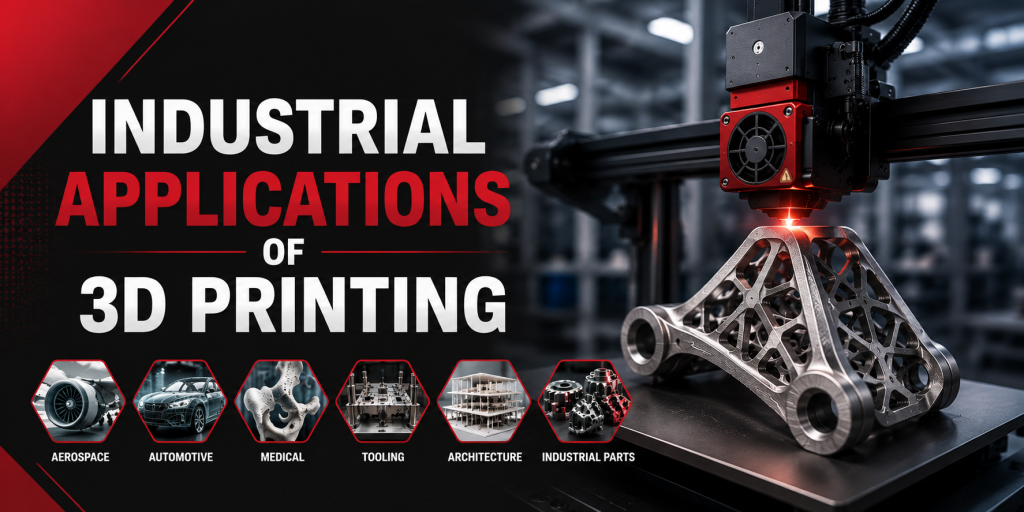
 Top 10 Industrial Applications of 3D Printing and Their Benefits15 May 2026
 -
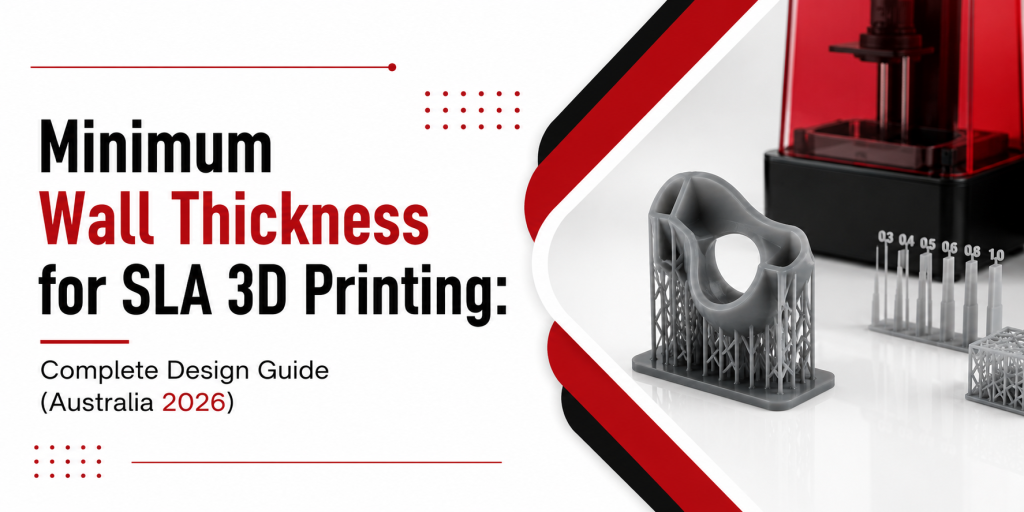
Minimum Wall Thickness for SLA 3D Printing: Design Guide 202608 May 2026
Categories
- Blogs
- 3D Printing Articles
- 3d Scanning Articles
- Cad Drafting Articles
- FEA Services Articles
Need a large-format 3D printed component or industrial prototype in Australia? Contact CAD Deziners to discuss your CAD model, dimensions, material requirements and application.