
Industrial Designers Melbourne: Product Concept to Manufacturing Ready Design

Every physical product starts as an idea but not every idea makes it to store shelf, warehouse or factory floor. That gap between “we have a concept” and “we can manufacture this” is where most products succeed or fail. This is where industrial designers in Melbourne work.
For Melbourne startups, manufacturers, engineering teams and inventors working with industrial designers Melbourne businesses know works can be the difference between a design that looks good on screen and a product that can actually be built assembled and sold. At CAD Deziners industrial design is linked directly to CAD modelling, prototyping, 3D scanning, 3D printing and manufacturing support so decisions made early in the design stage hold up later in production.
What Do Industrial Designers in Melbourne Actually Do?
An industrial designer shapes the physical form, function and usability of a product with manufacturing, materials and cost in mind. It is somewhere between creative design and engineering — a role that sits between the two.
Depending on what project they’re working on industrial designers in Melbourne might do some or all of the following:
- Concept sketching and ideation.
- Form and ergonomic development.
- 3D CAD modelling.
- Material and finish selection.
- Component and assembly design.
- Design for manufacturing (DFM) review.
- Prototype planning and testing.
- Design refinement based on feedback.
A consumer product may need more attention to appearance, comfort and user interaction; an industrial or mechanical component often needs closer attention to tolerances, structural performance and production methods. Industrial design doesn’t force every project through the same process — it adjusts to the product.
From Concept to Manufacturing-Ready Design: The Process
Converting an idea into a design that a factory can actually make usually goes through a process (the exact steps may vary depending on complexity but this general sequence applies to most projects handled by industrial designers in Melbourne).
1. Defining the Brief
Before anything can be sketched, the designer needs to know what problem they are trying to solve. This usually covers what the product needs to do, who will use it where will it be used and any constraints around size, budget or materials. A clear brief prevents wasted design cycles later on.
2. Concept Exploration
Usually several directions are explored with sketches, reference models or early digital shapes — at this point we want to try out different forms and functions before narrowing it down to one concept that is worth developing further.
3. 3D CAD Development
Once a concept is chosen it goes into 3D CAD modelling (dimensions, wall thicknesses, fit of components and mechanical details etc.). A solid CAD file also becomes the basis for prototyping and eventually manufacturing.
4. Prototyping and Physical Testing
A digital model only shows you so much — that’s why most industrial designers Melbourne teams we work with build physical prototypes before committing to a final design.
Building a prototype (FDM, SLA, SLS or other 3D printing methods) shows how a design feels, fits and functions in the real world. Testing at this stage often reveals issues that were invisible on screen.
5. Design Refinement
Almost no first design is the final design. Prototyping, stakeholders and manufacturing partners will give feedback on material choice, wall thickness, fastening methods or overall geometry etc.
6. Preparing for Manufacturing
The last stage is making sure the design actually works with the intended production method. A part designed for CNC machining requires different considerations than one designed for sheet metal fabrication or injection moulding. Catching this early prevents expensive redesigns after tooling starts.
Why Melbourne Businesses Benefit From Local Industrial Design Support
Working with industrial designers based in Melbourne rather than overseas or remote providers has practical benefits for businesses that need to move fast and communicate clearly:
- Faster feedback loops — design work happens back and forth regularly. Being in the same time zone and (in many cases) able to meet in person speeds up reviews and delays.
- Familiarity with local manufacturing — Melbourne has established manufacturers, machine shops and fabricators so a local design team knows what’s realistic to produce nearby and how to design around it.
- Understanding of local industries — Melbourne businesses are automotive, manufacturing, mining, healthcare, construction, consumer products etc. A design partner familiar with these sectors can apply relevant standards and expectations from day one.
- One partner across multiple stages — Many design projects don’t end with a finished CAD file. CAD Deziners also does 3D scanning, 3D printing, CNC and sheet metal fabrication so a business can get the design and early production stages done through one technical partner instead of multiple suppliers.
Common Mistakes That Delay Manufacturing-Ready Designs
Even well funded product ideas can stall if certain issues aren’t caught early on. Some of the more common problems we see are:
- Designing for appearance only without checking manufacturability
- Skipping physical prototypes relying only on digital models
- Choosing material before cost or supply constraints are known
- Tolerance and fit issues left until tooling starts
- Underestimating how assembly complexity affects production cost
This is one of the main reasons Melbourne businesses bring industrial designers in earlier rather than later — catch them while they’re cheap to fix (not after tooling has started).
Industries Supported by Industrial Designers In Melbourne
What kind of design approach to take depends very much on industry and intended use of the product.
CAD Deziners works across many industries relevant to Melbourne businesses including:
- automotive — components that need precise fit, tolerances and performance under real world conditions.
- manufacturing — new component design, product improvements and production ready CAD models.
- Mining — equipment and parts for harsh industrial use.
- Healthcare — products that need to be used safely, materials chosen carefully and precision controlled.
- Marine — components that can withstand harsh operating conditions.
- Consumer Products — designs balancing appearance ergonomics cost effective manufacturing
How to Choose the Right Industrial Designer in Melbourne
Not all design firms are the same. When comparing industrial designers in Melbourne ask questions to help you decide which fits best:
- Do they know your industry? Sector experience allows a designer to anticipate requirements specific to your product type.
- Can they produce manufacturable CAD models? Clean CAD data is needed for prototyping tooling production.
- Do they have prototyping capability in house? Testing physical prototypes early reduces risk of costly changes late in process.
- Can they support your manufacturing method? Ask if the team has CNC machining sheet metal fabrication 3D printing injection moulding experience
- Can they work from an existing part? If you have an existing part capabilities like 3D scanning reverse engineering can speed up redesign process
- How do they handle revisions? Design work is iterative so feedback process as much as initial concept matters
Recent Posts
-
 How Australian Industries Recreate Obsolete Parts with Reverse Engineering03 Jun 2026
 -
 Reverse Engineering & 3D Printing for Automotive Aftermarket Parts29 May 2026
 -
CAD Drafting vs BIM for Construction Projects in Australia22 May 2026
-
 Top 10 Industrial Applications of 3D Printing and Their Benefits15 May 2026
 -
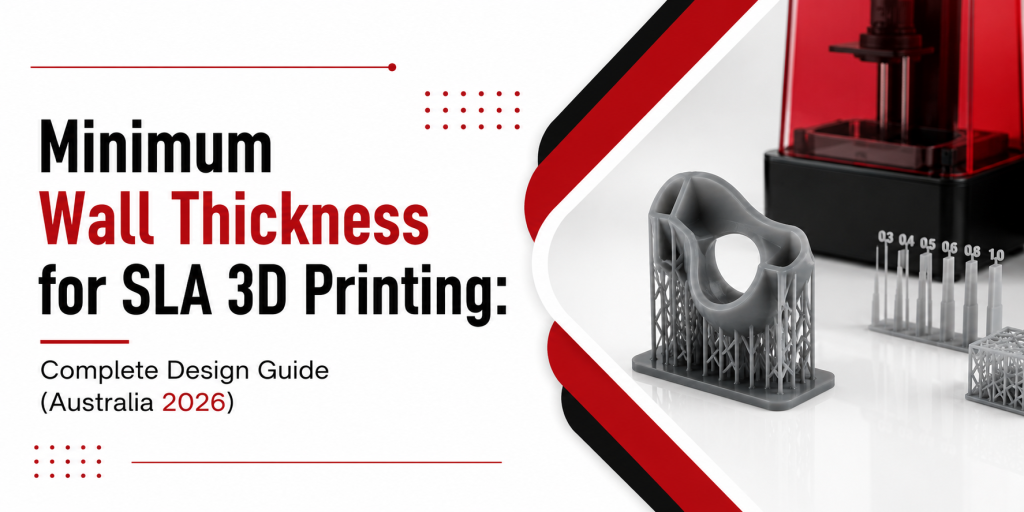
Minimum Wall Thickness for SLA 3D Printing: Design Guide 202608 May 2026
Categories
- Blogs
- 3D Printing Articles
- 3d Scanning Articles
- Cad Drafting Articles
- FEA Services Articles
Frequently Asked Questions
Find answers to common questions
Concept sketches, 3D CAD models, prototypes and manufacturing-ready design files (depending on the project).
No. A lot of projects start with a rough sketch or written idea or an existing physical part that needs improvement/reverse engineering.
This will depend on complexity of product, number of design changes made and if physical prototyping is involved. Simple products may move faster than multi component assemblies.
Industrial design looks at form, function and manufacturability of a product. Product development looks at prototyping, testing and steps needed to bring a design into full production.
Yes. Using 3D scanning an existing component can be captured digitally and used as the starting point for redesign or improvement work.
Yes. CAD Deziners support industrial design and CAD modelling but also 3D printing, CNC and sheet metal fabrication to move a design towards production.
If you have a product idea, a rough sketch, or an existing part that needs improvement, our industrial designers in Melbourne can help take it from an early concept through to a manufacturing-ready design. Get in touch with the CAD Deziners team to talk through your next project.