
Defence Jobs in Australia: How 3D Printing and Engineering Are Shaping the Future of Defence
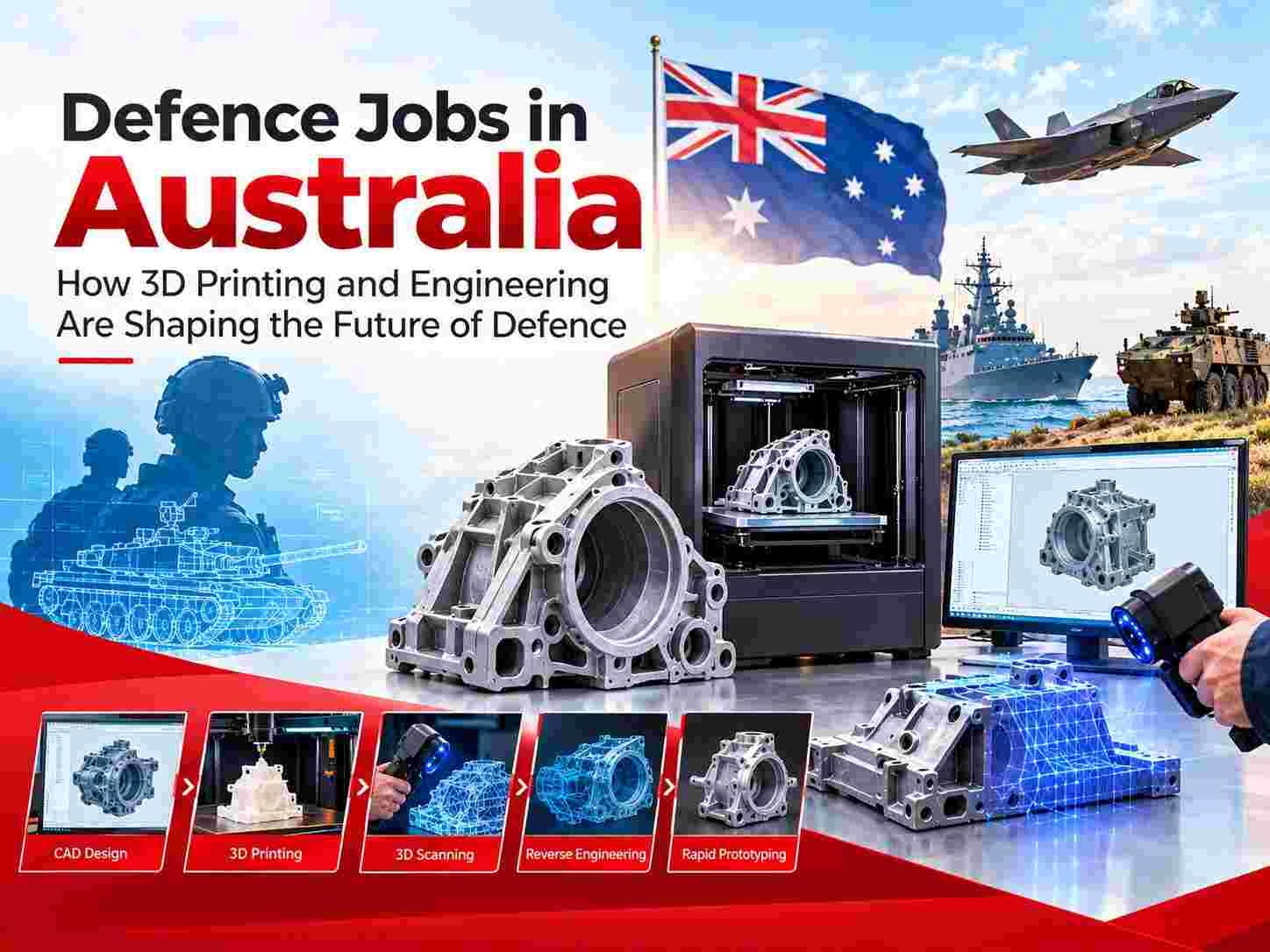
When people search for defence jobs they tend to think about roles with the Australian Defence Force, government departments or large defence contractors but Australia’s defence sector is so much more than that.
Behind every aircraft, naval platform, military vehicle, autonomous system and specialised defence component is a large network of engineers, designers, manufacturers, technicians, technology specialists and Australian defence industry suppliers.
And as Australia’s defence industry moves towards advanced manufacturing and digital engineering technologies (3D printing, CAD modelling, 3D scanning, reverse engineering, rapid prototyping) become more relevant.
For businesses in this supply chain these technologies can turn an engineering concept into a tested physical part; recreate legacy parts or speed product development.
This is where companies like CAD Deziners can help grow Australia’s defence and advanced manufacturing ecosystem.
What Do Defence Jobs Involve?
The defence industry of today requires much more than traditional military roles.
Current Australian Defence career pathways include engineering, science technology research, digital systems and other specialist areas.
Graduate pathways for Defence (for example) include engineering and research and innovation roles in autonomous systems robotics hypersonics missile defence emerging technologies.
There are also opportunities across the broader defence industry supply chain.
These can include:
- Defence engineers.
- Mechanical designers.
- CAD engineers and drafters
- Manufacturing engineers
- Product development specialists
- 3D printing and additive manufacturing specialists
- Quality and inspection professionals
- CNC and advanced manufacturing technicians
- Reverse engineering specialists
- Research and development professionals
- Aerospace and naval engineering professionals
- Defence technology specialists
Australia’s Defence industry strategy is also placing more emphasis on skills, STEM education workforce development and sovereign industrial capability.
So when looking at defence jobs in Australia it’s not just about Defence roles but understanding the technical ecosystem which supports defence capability.
Why 3D Printing Matters to Defence Industry Jobs
One of the technologies creating new possibilities in advanced manufacturing is 3D printing (also known as additive manufacturing).
Unlike conventional manufacturing where material is cut, machined or formed 3D printing builds an object layer by layer from a digital model.
This can be particularly useful in defence because many defence projects involve:
- Complex parts.
- Low volume production.
- Prototypes.
- Customisation.
- Replacement parts.
- Legacy equipment.
- Lightweight structures.
- Rapid design iterations.
Australia’s Defence industry has already looked at additive manufacturing as part of its wider advanced manufacturing capability.
Defence has previously stated 3D printing is an Industry 4.0 manufacturing technology relevant to the sector and more recent government investment has supported additive manufacturing equipment for defence applications.
That means 3D printing is not just a prototyping technology anymore.
It can be part of a much bigger digital engineering and manufacturing workflow.
From Defence Job to Defence Project: Where Engineering Begins
Imagine a defence company needs to develop a new component.
Before anything can be manufactured, engineers may need to:
Concept → CAD Design → Engineering Review → Prototype → Testing → Modification → Manufacturing
A CAD engineer or product development specialist may create the digital model.
A 3D printing specialist can then turn that model into a physical prototype.
Engineers can inspect the prototype, identify design changes and send the revised design back into the digital workflow.
This ability to move quickly between digital design and physical prototypes can be valuable when developing complex products.
For defence businesses, it can mean fewer assumptions during the early development stage and more opportunities to evaluate a design before committing to a larger manufacturing process.
How 3D Scanning Helps Defence Engineering.
3D printing is only part of the equation.
3D scanning and reverse engineering can also be useful when defence organisations and manufacturers are working with existing equipment.
Old equipment may not always have complete digital CAD files available.
Some components may be hard to measure manually, others were manufactured decades ago.
A 3D scanner can take the geometry of an existing component and convert that physical information into usable digital data.
The workflow can then progress through:
Physical Component → 3D Scan → Digital Model → Reverse Engineering → CAD Design → Prototype/Manufacturing.
CAD Deziners offers 3D scanning and reverse engineering services that turn physical components into CAD models and manufacturing drawings.
Scanning is also used for legacy component analysis, inspection, digital documentation and recreation of unavailable parts.
For defence suppliers dealing with legacy equipment this kind of digitalisation can be particularly useful.
How CAD Deziners Supports the Australian Defence Industry
For defence businesses the challenge isn’t always finding a 3D printer.
The bigger challenge may be getting the right digital engineering workflow before something goes to the printer or manufacturing machine.
This is where CAD Deziners can help.
Our Australian engineering team offers services including:
3D CAD Design & Drafting.
Create detailed digital models and engineering drawings for new components, modifications and product development projects.
3D Laser Scanning.
Capture the geometry of existing components, equipment and assemblies for inspection, documentation and digitalisation.
Reverse engineering.
Create digital CAD models from physical or legacy components where original manufacturing data may not be available.
Rapid Prototyping.
Physical prototypes to help engineers test designs before moving toward production.
Fast prototyping.
Produce physical prototypes so engineers can test designs before moving on to production.
Product Development.
Support the development of new products and components from concept stage through engineering and prototype stages.
3D Printing.
CAD Deziners offers multiple 3D printing technologies (FDM, SLA, SLS and resin) plastic, resin or metal depending on application.
A Real Defence Engineering Application
CAD Deziners has done defence work already (large 4 metre missile display model) so we know how to convert digital engineering data into a physical large format model.
This type of project shows how CAD, engineering and 3D printing can be combined to turn a complex digital design into a physical object.
More generally CAD Deziners supports defence suppliers and engineering organisations with CAD design, product development, 3D laser scanning, reverse engineering and rapid prototyping.
The objective isn’t simply to print an object.
It is to help businesses move from engineering data to a practical physical outcome.
Looking for Engineering Support for a Defence Project?
If you’re a defence contractor, engineering company, manufacturer or technology business in Australia CAD Deziners can help with the engineering side of your project.
From 3D scanning and reverse engineering to CAD design, product development, rapid prototyping and 3D printing our team turns complex requirements into practical engineering solutions.
If you are building a new component, recreating a legacy part, validating a design or making a physical prototype CAD Deziners can talk defence engineering with you.
Recent Posts
-
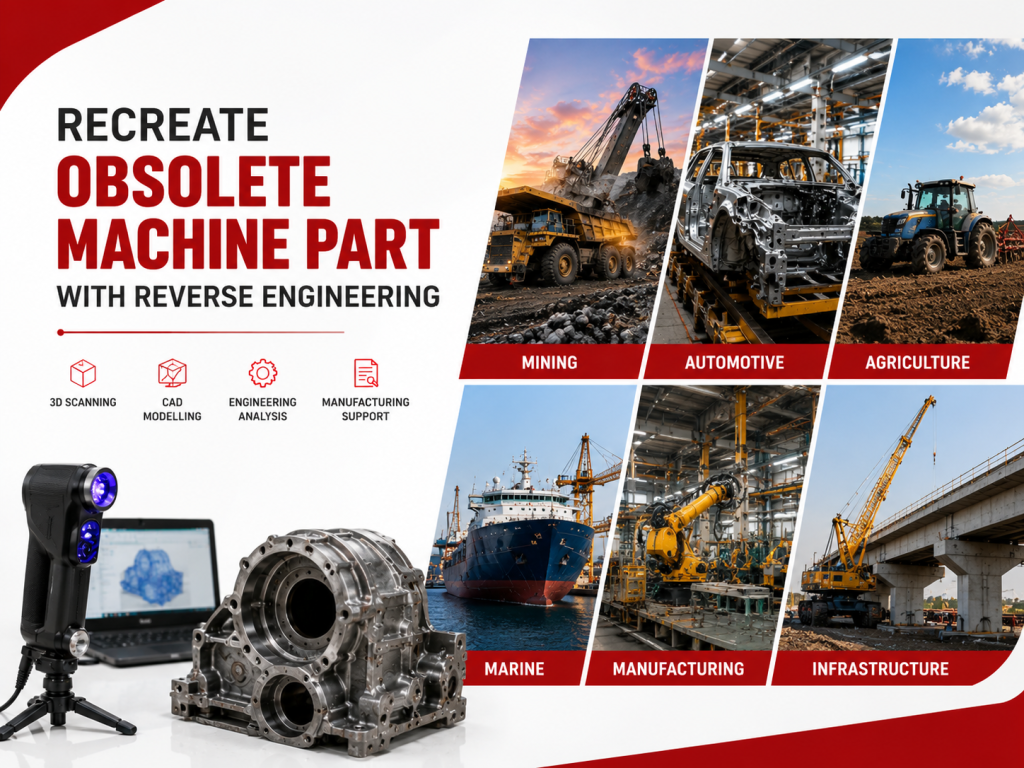
 How Australian Industries Recreate Obsolete Parts with Reverse Engineering03 Jun 2026
 -
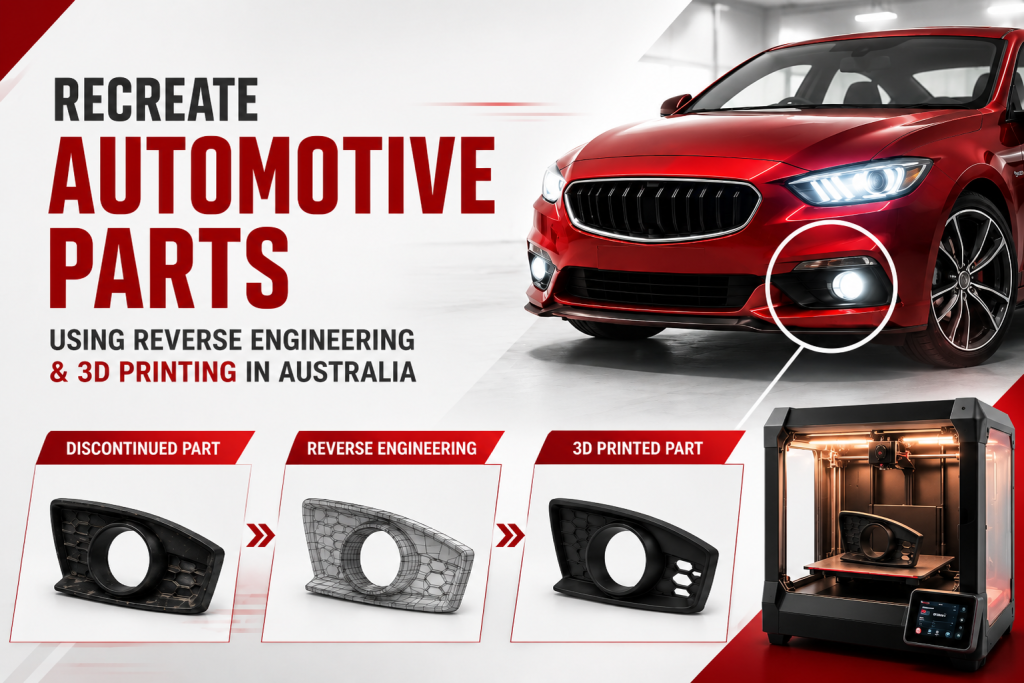
 Reverse Engineering & 3D Printing for Automotive Aftermarket Parts29 May 2026
 -
CAD Drafting vs BIM for Construction Projects in Australia22 May 2026
-
 Top 10 Industrial Applications of 3D Printing and Their Benefits15 May 2026
 -
Minimum Wall Thickness for SLA 3D Printing: Design Guide 202608 May 2026
Categories
- Blogs
- 3D Printing Articles
- 3d Scanning Articles
- Cad Drafting Articles
- FEA Services Articles
Explore our defence engineering capabilities or contact CAD Deziners to discuss your project.