
PETG vs PLA vs ABS: Which 3D Printing Filament Is Best for Your Project?
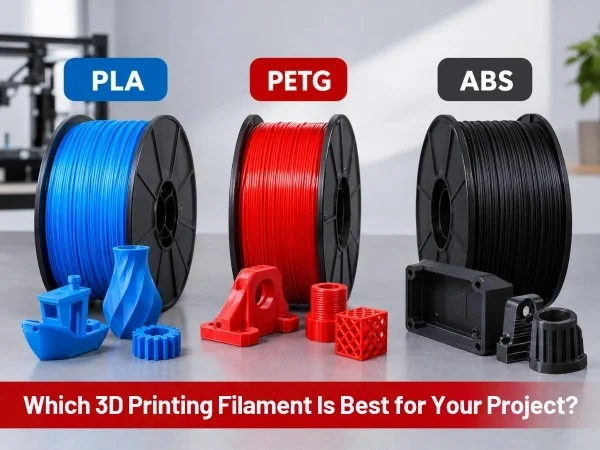
Choosing the right 3D printing material is an important engineering decision, particularly when manufacturing functional prototypes, mechanical components or industrial parts. If you’re making functional prototypes of mechanical components or industrial parts, a material that works well during visual prototyping might not work in temperature mechanical loads or operating conditions in real world application.
The most common thermoplastics are PETG, PLA and ABS. Each has its own strength/thermal resistance/dimensional stability/printability properties.
For Australian manufacturers, product designers and engineering businesses, differences between these materials can reduce prototype failure rates; increase design validation and prevent unnecessary production cost.
If Australian businesses want to design a fidget toy that is unique to them then 3D printing lets you test shapes and mechanisms, sizes and materials before moving production. CAD design, prototyping and manufacturing expertise can turn an idea into a practical customised product.
Understanding PLA, ABS and PETG Filament for 3D Printing
PLA (Polylactic Acid), ABS (Acrylonitrile Butadiene Styrene) and PETG (Polyethylene Terephthalate Glycol-modified) are thermoplastics which are usually processed by Fused Deposition Modelling (FDM) or Fused Filament Fabrication (FFF).
All three materials are used in AM but their performance characteristics are very different.
- PLA is generally preferred for visual prototypes, concept models and parts that do not experience significant mechanical or thermal stress.
- ABS is an engineering thermoplastic known for its toughness, impact resistance and higher temperature tolerance compared with PLA and standard PETG grades
- PETG provides a practical balance between ease of printing, toughness, layer adhesion and chemical resistance, making it useful for selected functional prototypes and industrial components.
Material choice should not be based on filament cost alone. Performance must be achieved.
PETG vs PLA vs ABS: Technical Comparison
The following table highlights important differences for industrial 3D printing applications.
Property | PLA | PETG | ABS |
Printability | Easy | Moderate | More demanding |
Toughness | Relatively brittle | Good | Good to high |
Heat resistance | Low | Moderate | Higher |
Layer adhesion | Generally good | Generally strong | Process-dependent |
Warping tendency | Low | Low to moderate | Higher |
Chemical resistance | Limited and chemical-dependent | Good against many common chemicals | Chemical-dependent |
Typical applications | Concept models, fit checks | Functional prototypes, brackets, housings | Enclosures, impact-resistant components |
These comparisons describe typical unfilled grades. Actual performance depends on filament formulation, print orientation, infill, wall thickness and processing conditions.
When Should You Choose PETG for 3D Printing?
For businesses that are interested in 3d printing filament, the question is whether material can meet mechanical and environmental requirements of finished components.
PETG is used when prototyping needs more toughness than PLA but doesn’t need the processing complexity of ABS.
Its relatively strong interlayer bonding allows parts to be loaded moderately.
Industrial Applications of PETG
- Automotive: PETG can be used for non-structural brackets, assembly fixtures, protective covers and prototype housings that are not exposed to high heat.
- Marine: PETG can be used for equipment housings, fixtures, prototype components etc where moisture resistance is required. UV exposure saltwater conditions and long term durability all have to be taken into account for the application.
- Manufacturing & engineering: PETG can be used for jigs, positioning aids, machine guards and custom workshop accessories (design & safety assessment required).
- Product development: Engineers can test snap fit features, component assembly, enclosure geometry and functional product concepts using PETG.
However PETG is not necessarily suitable for high temperature, structural or safety critical applications.
Where Does PLA Perform Better Than PETG and ABS?
PLA is still useful early in product development because it gives good dimensional detail, relatively low warping and printing efficiency.
For Australian engineering companies PLA is most useful when the goal is to prove a product’s shape, size or assembly configuration before buying more expensive materials.
Common applications include:
- Product concept models and presentation prototypes.
- Ergonomic & dimensional checks
- Architectural and display models
- Low load assembly clearance checks
- Early stage design iterations
PLA’s biggest weakness is that it’s relatively low heat resistant — parts warp when hot (e.g. inside cars or near industrial equipment).
So PLA is not used for components that need sustained thermal performance.
Why Is ABS Used for Engineering Prototypes?
ABS is used where toughness, impact resistance and higher operating temperatures are required.
Its properties make it suitable for prototype enclosures, equipment covers, automotive interior parts and mechanical housings.
ABS also allows some post processing (machining and solvent based surface finishing under controlled conditions).
But ABS is hard to make. Shrinkage and warping during cooling (when printing large components) makes it more prone to shrinkage.
Controlled chamber temp, ventilation and printing parameters can all be used to get more consistent results. Controlled chamber temp good ventilation optimised printing parameters will do this. For industrial projects ABS may be better than PETG (temperature resistance is the main requirement, grade of specific material and printed part should meet design requirements).
Why Material Selection Matters for Australian Industries
Picking a filament in professional additive manufacturing is not comparing values on the tensile strength table in a product datasheet.
Engineers should also consider actual loads, temperature exposure, chemical environment, dimensional tolerances and expected service life of the component.
For example an automotive assembly fixture might need dimensional stability; a marine equipment enclosure moisture resistance and mechanical toughness; mining or heavy engineering prototype different material or manufacturing process etc.
Experienced 3d printing services providers in Australia can tell businesses PETG, PLA or ABS is right for the application.
Print orientation is just as important though because FDM parts are anisotropic (i.e their strength depends on the direction of loading relative to deposited layers).
For demanding applications representative printed samples are often better than published material properties.
PETG vs PLA vs ABS: Which Material Should Your Business Select?
The best material depends on what the component needs to achieve.
Choose PLA for visual models, early-stage design validation and low-stress prototypes where print accuracy and efficiency are priorities.
Choose PETG for functional prototypes, selected mechanical components and applications requiring a balance of toughness, layer adhesion and manageable processing.
Choose ABS for parts requiring improved thermal performance and impact resistance, where suitable manufacturing controls are available.
For projects involving high structural loads, demanding temperatures or specialised chemical environments, alternative engineering materials such as nylon, polycarbonate or fibre-reinforced polymers may be worth investigating.
The final decision should be supported by engineering assessment and application-specific testing.
Professional 3D Printing and Prototyping Services in Australia
CAD Deziners know that successful product development begins with right materials, optimised geometry of components and manufacturing process selection.
We provide automotive marine aerospace defence mining manufacturing industrial engineering product design CAD modelling, 3D printing, rapid prototyping and related engineering services to Australian businesses.
Whether you need a PETG functional prototype, ABS enclosure, PLA concept model or help evaluating alternative manufacturing methods our team can help find the right solution for your project.
Looking for professional 3D printing and prototyping services in Australia?
Contact CAD Deziners to discuss your CAD files, component specifications, material requirements and production objectives.
Recent Posts
-
 How Australian Industries Recreate Obsolete Parts with Reverse Engineering03 Jun 2026
-
 Reverse Engineering & 3D Printing for Automotive Aftermarket Parts29 May 2026
-
CAD Drafting vs BIM for Construction Projects in Australia22 May 2026
-
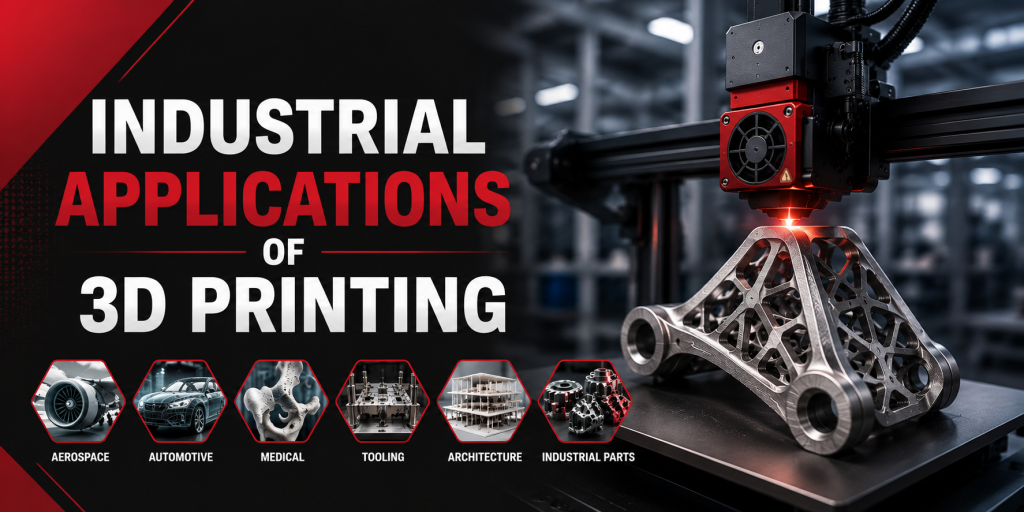
 Top 10 Industrial Applications of 3D Printing and Their Benefits15 May 2026
-
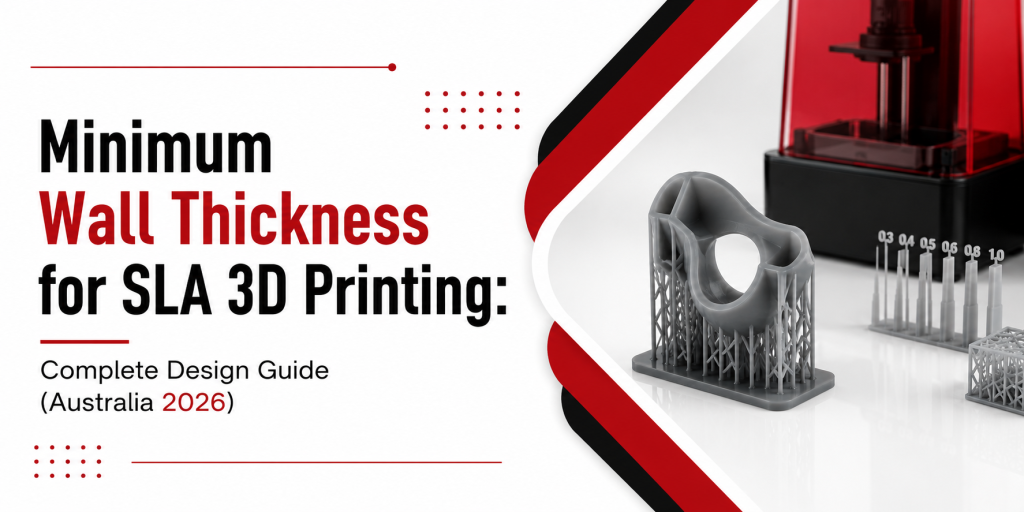
Minimum Wall Thickness for SLA 3D Printing: Design Guide 202608 May 2026
Categories
- Blogs
- 3D Printing Articles
- 3d Scanning Articles
- Cad Drafting Articles
- FEA Services Articles