
Miniature Production Workshop Model
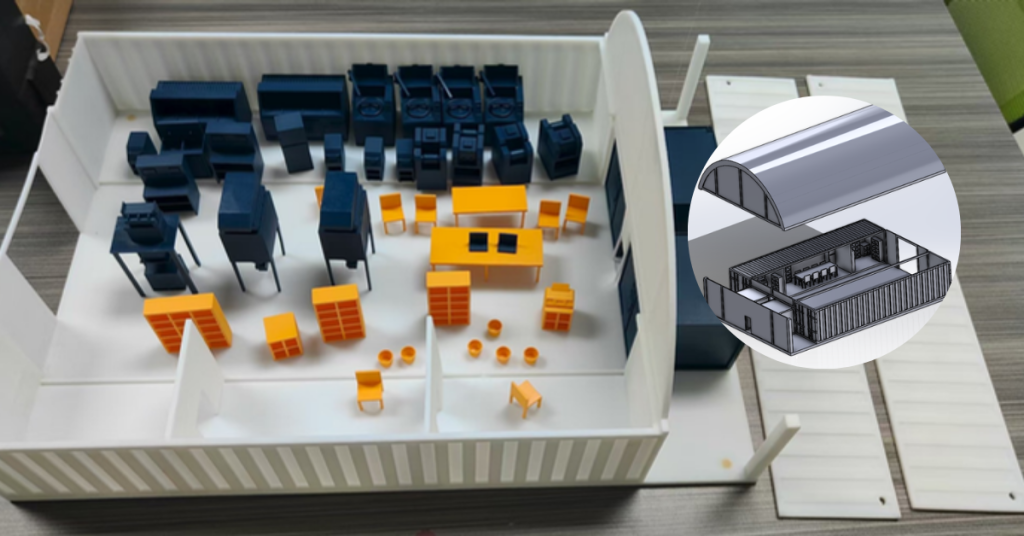
CAD Deziners designed and developed a fully modular miniature production workshop that accurately replicated the client’s facility. Using advanced 3D CAD modeling, every machine, workstation, and accessory was created as an individual component, with detachable sections and sliding walls for maximum flexibility. The final model provides an interactive solution for layout planning, workflow visualization, process demonstrations, and team training, showcasing CAD Deziners’ expertise in precision engineering and custom modular design.
Personalized Trophy with Photorealistic Facial Integration
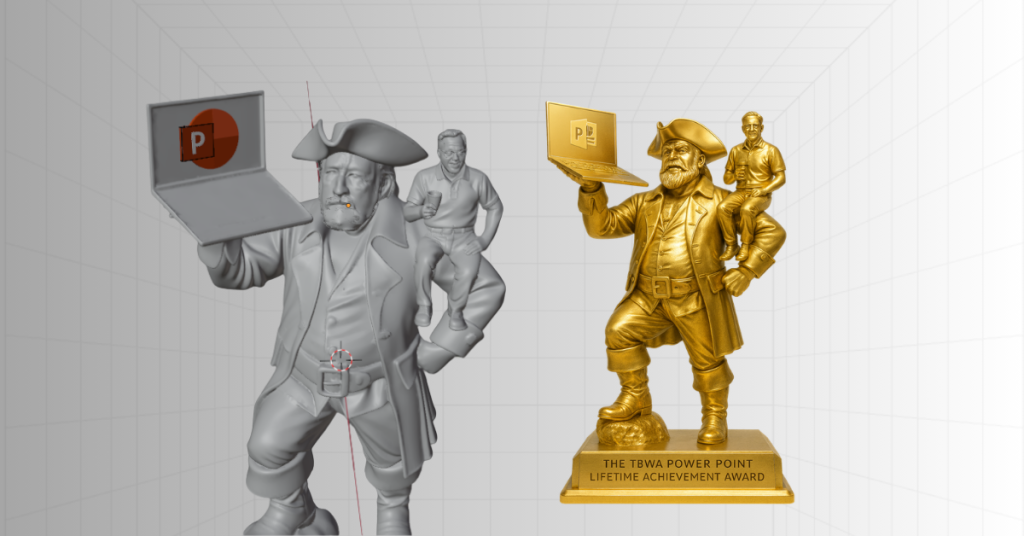
This case study demonstrates the end-to-end development of a personalized trophy sculpture featuring a photorealistic facial likeness, combining advanced 3D scanning, digital sculpting, CAD engineering, additive manufacturing, and precision finishing. The project required the accurate translation of facial features into a durable, display-quality award while maintaining structural integrity, aesthetic appeal, and manufacturing efficiency. Through an iterative design and prototyping process, the final solution achieved high dimensional accuracy, lifelike detail, and premium surface quality. The project highlights how modern digital design workflows and advanced manufacturing technologies enable the production of highly customized recognition products with consistent quality, repeatability, and scalable production potential for corporate, commemorative, and presentation applications.
As-Built 3D Scanning of Drop Deck Trailer
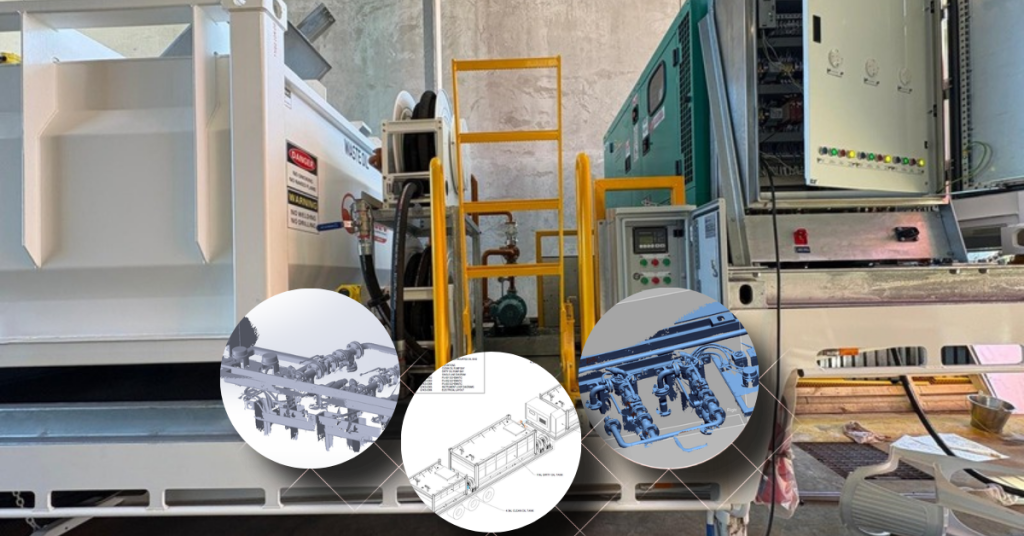
This case study demonstrates the application of high-accuracy as-built 3D laser scanning for a drop deck trailer carrying oil tanks, enabling the creation of precise digital representations of complex field conditions. The project focused on capturing critical structural geometry, equipment placement, and dimensional data to support engineering validation, retrofit planning, and CAD-based design workflows. By replacing conventional manual measurements with comprehensive point cloud data, the solution significantly reduced survey time, minimized measurement errors, and improved design confidence. The resulting as-built digital model provided a reliable foundation for manufacturing, modification, and future maintenance activities, enabling faster decision-making, enhanced project coordination, and reduced risk throughout the engineering and product development lifecycle.
Miniature Cube Sculpture Trophy
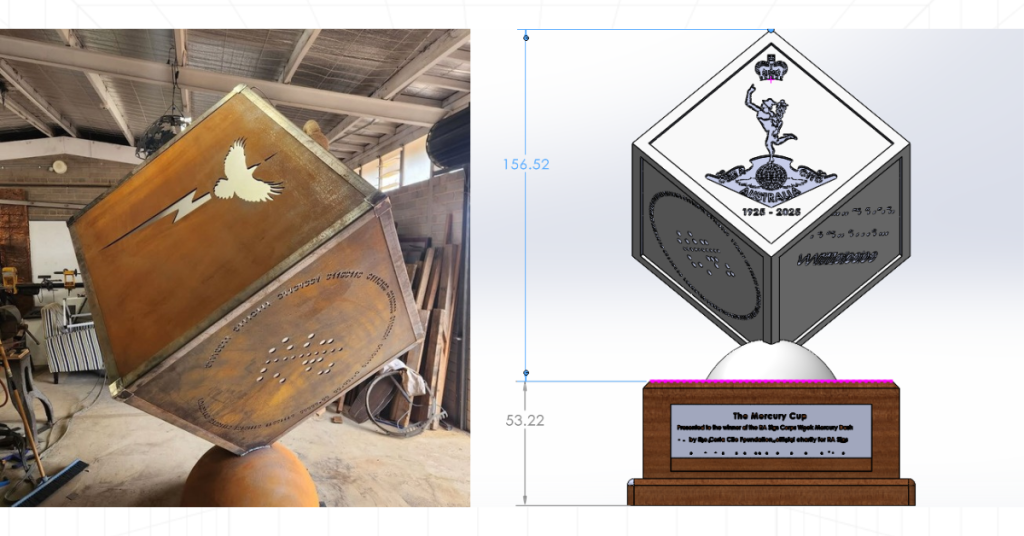
This case study presents the end-to-end development of a miniature cube sculpture trophy, demonstrating the integration of advanced CAD modeling, precision additive manufacturing, and high-quality finishing techniques to achieve a visually striking and dimensionally accurate product. The project required careful optimization of complex geometric features, fine surface details, and structural integrity while maintaining production efficiency. Through an iterative engineering approach, the final solution successfully balanced aesthetics, manufacturability, and durability, resulting in a premium presentation trophy. The project highlights how digital design, rapid prototyping, and precision manufacturing workflows can accelerate product development while ensuring consistent quality for custom awards, corporate recognition products, and limited-production display pieces.
PolyJet Multicolor Chibi Figurine Prototypes
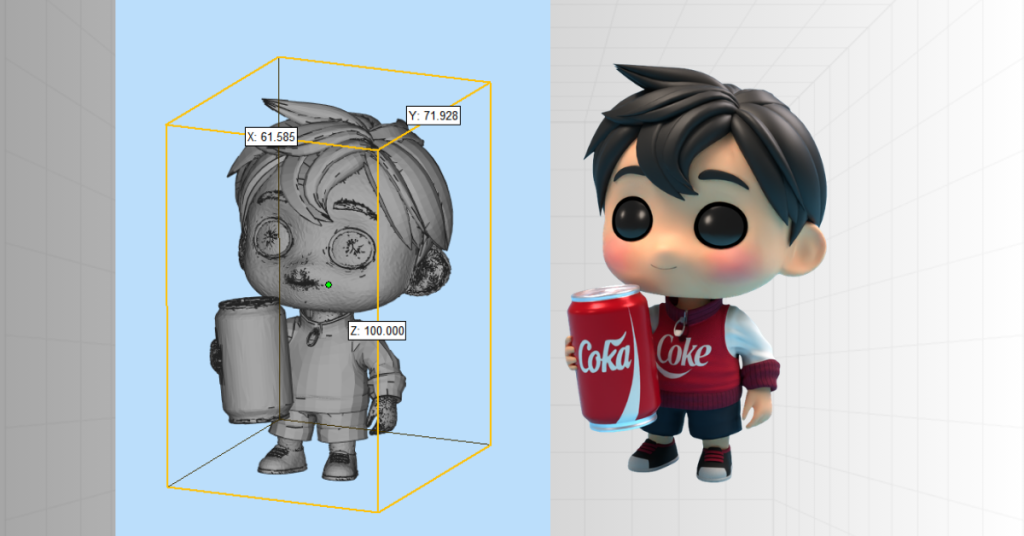
Cad Deziners successfully delivered a high-quality PolyJet multicolor 3D printed Chibi figurine, demonstrating the capability of advanced additive manufacturing for producing complex, full-color display models with exceptional surface finish and dimensional accuracy. The project required precise digital model preparation, color optimization, and support strategy to preserve intricate character details while minimizing post-processing. This case study highlights how PolyJet technology enabled rapid production of a visually accurate prototype, reducing development time while achieving premium aesthetic quality for collectibles, product visualization, and customized figurine applications.
3D-Printed Sculptures for Art Exhibition
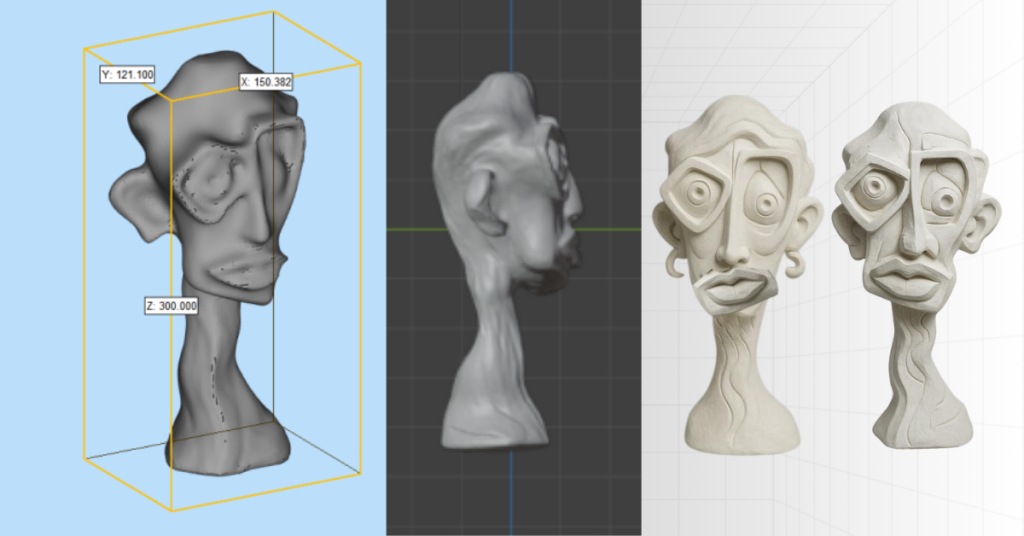
This case study presents the end-to-end development of a large-scale 3D printed sculpture created for an art exhibition, demonstrating the integration of advanced CAD engineering, additive manufacturing, and exhibition-grade finishing. The project required converting an artistic concept into a structurally sound, manufacturable physical sculpture while preserving intricate design features and visual accuracy. Through optimized digital modelling, strategic segmentation, precision 3D printing, post-processing, and assembly, the team successfully delivered a lightweight, durable, and high-quality display piece within project timelines. The outcome highlights how engineering-driven design and additive manufacturing enable efficient production of complex artistic installations for exhibitions, public displays, and custom architectural applications, reducing development time while ensuring exceptional dimensional accuracy and aesthetic quality.
SLA Dimensional Validation Prototype

Precision is critical in metal manufacturing, where even minor dimensional deviations can lead to assembly failures, increased costs, and production delays. In this project, Cad Deziners implemented an SLA (Stereolithography) 3D printing workflow to validate the dimensional accuracy and fit of a complex metal component before tooling and full-scale manufacturing.
By producing a highly accurate SLA prototype, the client was able to verify critical dimensions, evaluate component fitment, identify potential design issues, and implement design refinements early in the development cycle. This proactive validation process significantly reduced manufacturing risk, minimized costly design revisions, and accelerated the transition from prototype to production.
The project demonstrates how precision SLA prototyping serves as an effective engineering validation tool, enabling faster decision-making, improved product quality, and a more efficient product development process for complex metal components.
keyring Production

Cad Designers partnered with a client to manufacture 800 custom keyrings requiring high durability, fine detailing, and a premium painted finish. The project evolved from rapid prototyping into a comprehensive manufacturing optimisation process, where multiple production methods—including 3D printing, metal additive manufacturing, injection moulding, and wax moulding—were evaluated to identify the most efficient and scalable solution. After comparing performance, surface quality, lead time, and production costs, injection moulding was selected as the optimal manufacturing method. This project demonstrates Cad Designers’ expertise in guiding clients from concept validation to high-volume production through strategic engineering, process selection, and end-to-end manufacturing support.
Robot model

This case study presents the development of a high-precision 3D printed robot model engineered for public exhibition, demonstrating the effective transformation of a digital concept into a durable, display-ready physical asset. The project involved advanced CAD modeling, design optimization for structural integrity, additive manufacturing, and high-quality surface finishing to achieve both dimensional accuracy and visual appeal. Key engineering considerations included printability, component strength, assembly efficiency, and exhibition-grade aesthetics. The successful outcome highlights how integrated design and additive manufacturing workflows enable rapid realization of complex display models, supporting museums, government organizations, educational institutions, and marketing exhibitions with reliable, high-impact prototype and presentation solutions.
Keyring

This case study demonstrates the successful development and production of custom 3D-printed keyrings designed for a community-focused initiative requiring high levels of personalization, consistent quality, and scalable manufacturing. The project combined CAD-based design optimization with additive manufacturing to deliver durable, lightweight, and visually appealing products while maintaining rapid production timelines and cost efficiency. Careful consideration of material selection, print orientation, dimensional accuracy, and post-processing ensured reliable performance and a premium finish. The project highlights how additive manufacturing enables low-volume, highly customized production without tooling costs, making it an effective solution for promotional products, events, branding campaigns, educational institutions, and community engagement programs requiring fast turnaround and design flexibility.