
3D Scanner vs Traditional Measurement: Which Is Better in 2026?
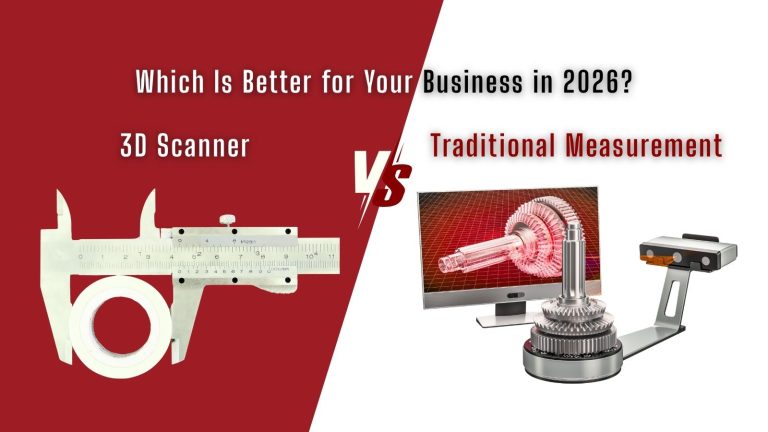
3D Scanner vs Traditional Measurement is a vital subject matter for enterprises that deal with manufacturing and engineering industries. Although traditional methods have been used for decades, advances in measurement technology have transformed the way products are inspected, analyzed, and created.
In this blog post, I am going to discuss both methods so that you can choose the most suitable option for your enterprise in the year 2026.
What Is a 3D Scanner?
A 3D scanner is a sophisticated machine that scans the physical form of an object and turns it into a digital model.
In contrast to other manual instruments, 3D scanners can capture millions of measurement points within a few minutes, providing very precise outcomes.
These digital models have applications in:
- Reverse engineering
- Quality assurance
- Designing products
- Production
What Are Traditional Measurement Methods?
The following are examples of Traditional measurement:
- Vernier calipers
- Screw micrometers
- Rules
- Coordinate measuring machines(CMMs)
Though used for a long time, such tools highly rely on manual readings and data gathering.
3D Scanner vs Traditional Measurement (Quick Comparison)
Feature | 3D Scanner | Traditional Measurement |
Data Capture | Millions of points | Limited points |
Speed | Very fast | Slow |
Accuracy | High (0.02–0.1 mm) | Moderate |
Automation | High | Low |
Human Error | Minimal | High |
Cost Over Time | Lower (ROI) | Higher (labour cost) |
1. Accuracy: Digital Precision vs Manual Limitations
The main advantage of a 3D scanner is its extremely high accuracy that reaches values such as 0.02 mm to 0.1 mm.
While traditional measurement methods involve:
- Points only
- Human errors
- No complex shapes detection possible
2. Speed: Minutes vs Hours
Speed is yet another major benefit of using the 3D scanner.
The scanning procedure is carried out within minutes, whereas traditional approaches require hours.
A procedure that took hours or even days to complete is now achievable within a shorter time frame.
Quick data capture leads to quick project delivery.
3.Data Quality & Level of Detail
Conventional technology produces fewer data points, resulting in models that lack detail.
3D scanner produces:
- Geometry of the full surface
- High-definition digital model
- Point cloud
Such high levels of data quality and detail permit thorough inspection of the object down to its smallest imperfections.
4. Reverse Engineering Capability
Reverse engineering is an area where 3D scanners excel.
When using 3D scanning technology, one can:
- Capture old/obsolete parts as digital files
- Recreate lost CAD models
- Replicate missing parts
This becomes essential when dealing with sectors such as the automotive industry, which requires the reproduction of outdated parts.
Classic reverse engineering techniques fail at capturing:
- Complicated geometries
- Organic shapes
5.Cost: Initial Costs Versus Return on Investment Over Time
While traditional equipment may appear more cost-effective to start with, it involves:
- Higher labor costs
- Slow processes
- Greater chances of redoing work
A 3D scanner needs more initial costs but provides:
- Efficiency in process
- Savings in labor
- Minimal errors
- Lower costs over time
In the long run, businesses get better ROI using 3D scanners.
6.Convenience and Safety
Traditional technologies demand:
- Physical access to objects
- Manual measurements in dangerous conditions
3D scanning makes possible distance measurements that are both safer and more convenient, especially when measuring dangerous or unreachable objects.
Applications of Scanning Technology in Industry
Scanners help spot flaws and perform quality control.
The entire car or its components can be scanned for design purposes.
Scans help develop accurate as-built models.
Product designers benefit from scans.
This level of flexibility cannot be achieved by conventional techniques.
When Should You Use Traditional Measurement?
Despite that fact, traditional measuring instruments may still be applied in such cases as:
- Measurement of basic shapes
- Performing inexpensive projects
- No precise measurements are required
Nevertheless, their use is inappropriate in terms of complexity and industrial applications.
When Should You Use a 3D Scanner?
A 3D scanner proves to be a preferred instrument if:
✔ Accuracy matters
✔ The shape is complicated
✔ Time is crucial
✔ Reverse engineering should be done
Final Verdict: Which One Is Better?
Should your business continue to use the conventional method of measuring objects, chances are that you’re wasting your time, money, and effort.
3D scanners undoubtedly have the edge over their conventional counterparts in terms of:
- Speed
- Accuracy
- Efficiency
- Quality of data collected
While traditional methods still have niche uses, modern industries are rapidly adopting 3D scanning as the standard.
Why Businesses Are Switching to 3D Scanners
This technology is preferred due to the following reasons:
- Decreased time taken to complete projects
- Increased accuracy
- Fewer mistakes
- Increased creativity
At service providers such as CAD Deziners, cutting-edge 3D scanning solutions are applied to ensure precision, facilitate reverse engineering, and increase efficiency.
Conclusion
Jump ahead to 2026, and the distinction becomes apparent:
👉 Conventional methods = restricted, time-consuming, unwieldy
👉 3D scanner = efficient, precise, advanced
In order to remain contemporary, it is essential, rather than merely recommended, that you invest in a reliable 3D scanner.
3D scanning technology is rapidly growing across Australian industries, supported by initiatives from CSIRO to advance digital manufacturing and innovation
Looking for high-performance 3D scanner solutions for your business?
Explore expert services here: https://caddeziners.com.au
Recent Posts
-
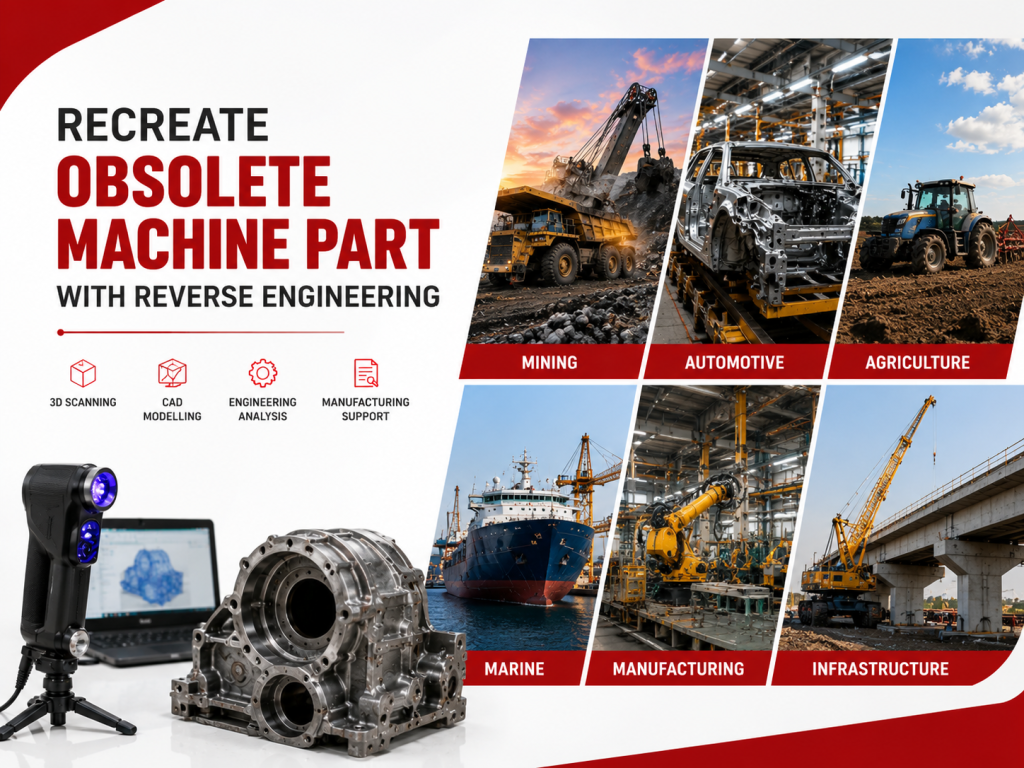
 How Australian Industries Recreate Obsolete Parts with Reverse Engineering03 Jun 2026
 -
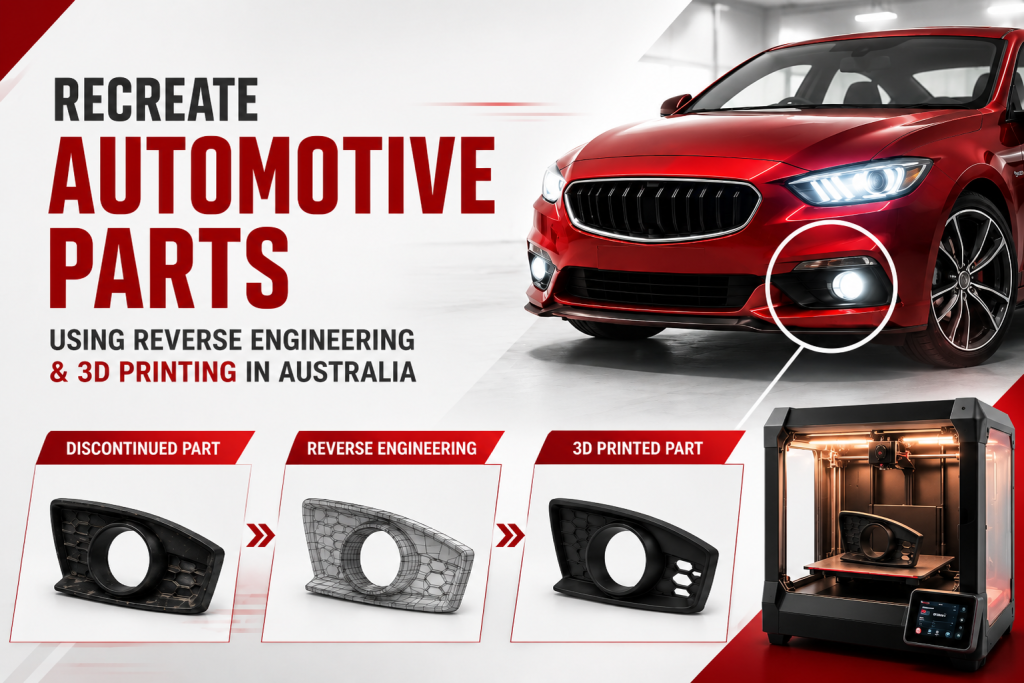
 Reverse Engineering & 3D Printing for Automotive Aftermarket Parts29 May 2026
 -
CAD Drafting vs BIM for Construction Projects in Australia22 May 2026
-
 Top 10 Industrial Applications of 3D Printing and Their Benefits15 May 2026
 -
Minimum Wall Thickness for SLA 3D Printing: Design Guide 202608 May 2026
Categories
- Blogs
- 3D Printing Articles
- 3d Scanning Articles
- Cad Drafting Articles
- FEA Services Articles
Frequently Asked Questions
Find answers to common questions
A 3D scanner is a type of technology used to scan the actual structure or shape of an object in its physical form and convert it into a digital 3D format. These are devices which make use of various scanning techniques such as lasers or light to capture the exact form and details of the scanned object.
The 3D Scanner is usually more accurate than conventional measuring instruments since it measures many, even millions of points on an object as opposed to just a few points when using conventional tools such as the ruler and the caliper. It is possible for a professional 3D Scanner to reach an accuracy level of 0.02mm to 0.1 mm.
The choice will heavily depend on your needs. As an example, if you have projects which demand scanning right at the spot, then your best bet would be the handheld scanner.
The accuracy rate of current 3D scanners is extremely high, with many professional 3D scanners boasting accuracy rates ranging from 0.02 mm to 0.1 mm.
The answer to this question would be yes because acquiring a 3D scanner provides many advantages such as decreased error rates, increased efficiency, better product quality, and reduced costs.
A number of industries may benefit significantly from the utilization of a 3D scanner, such as the manufacturing industry, automotive industry, construction industry, healthcare industry, and even product designing industries.